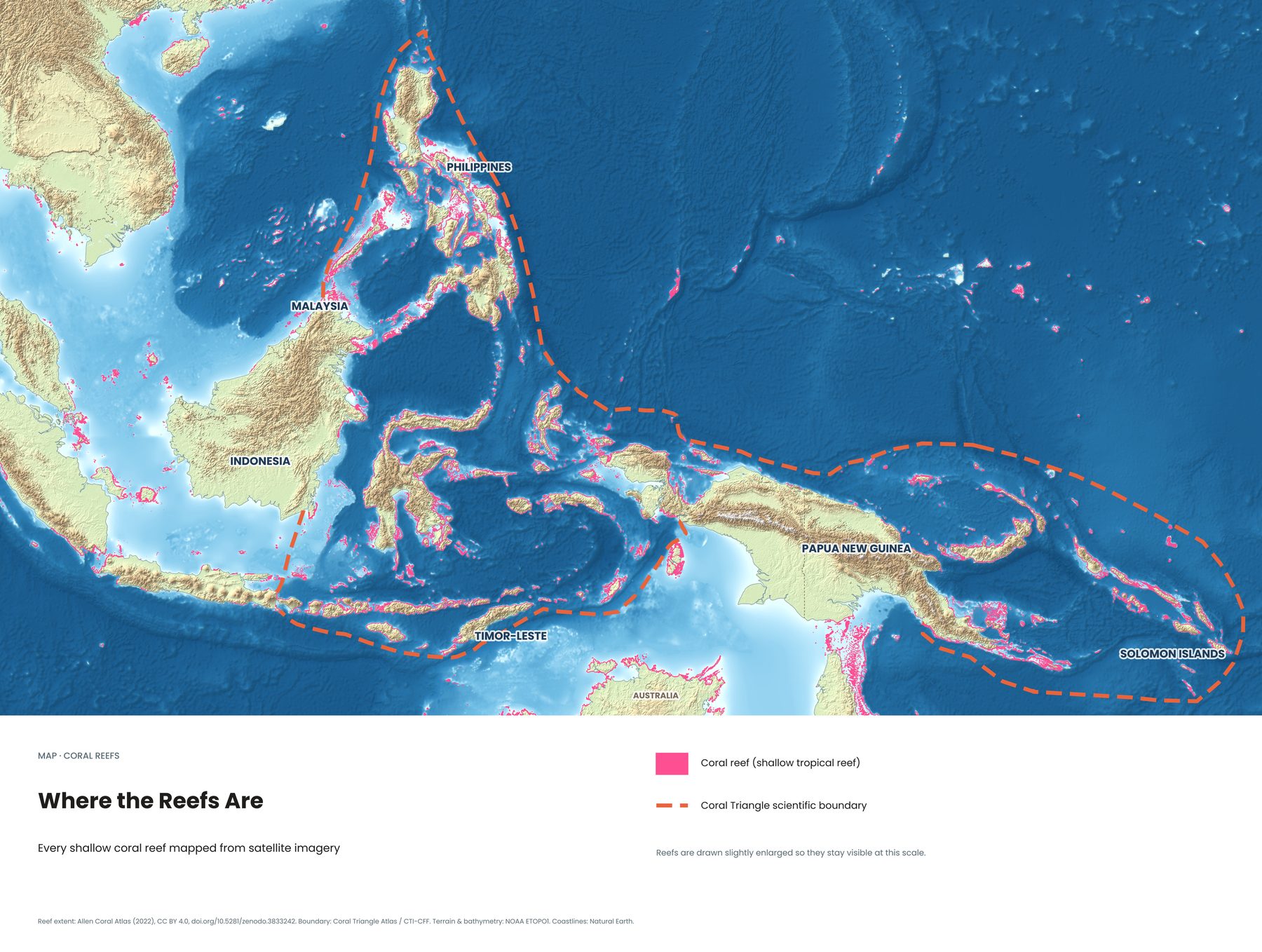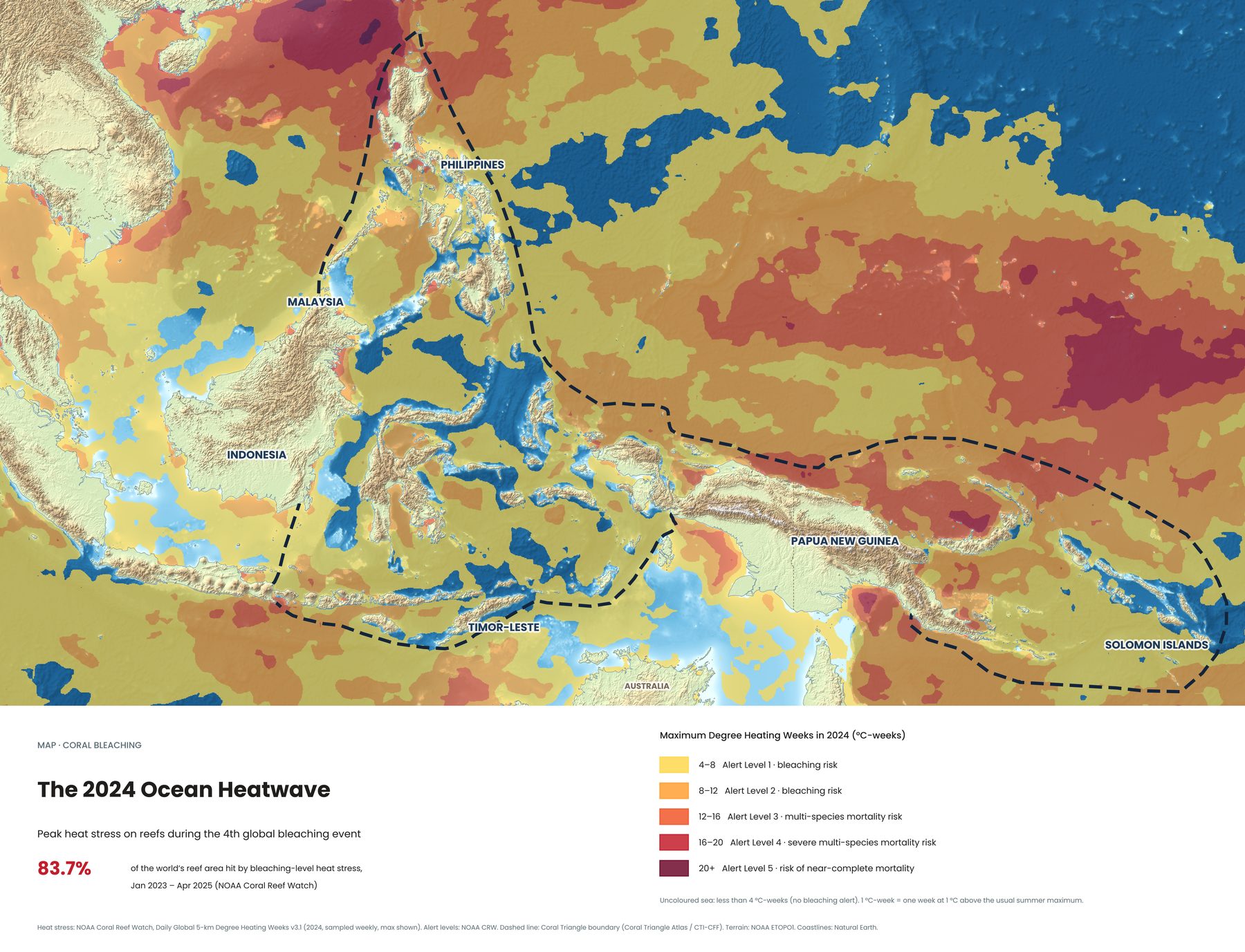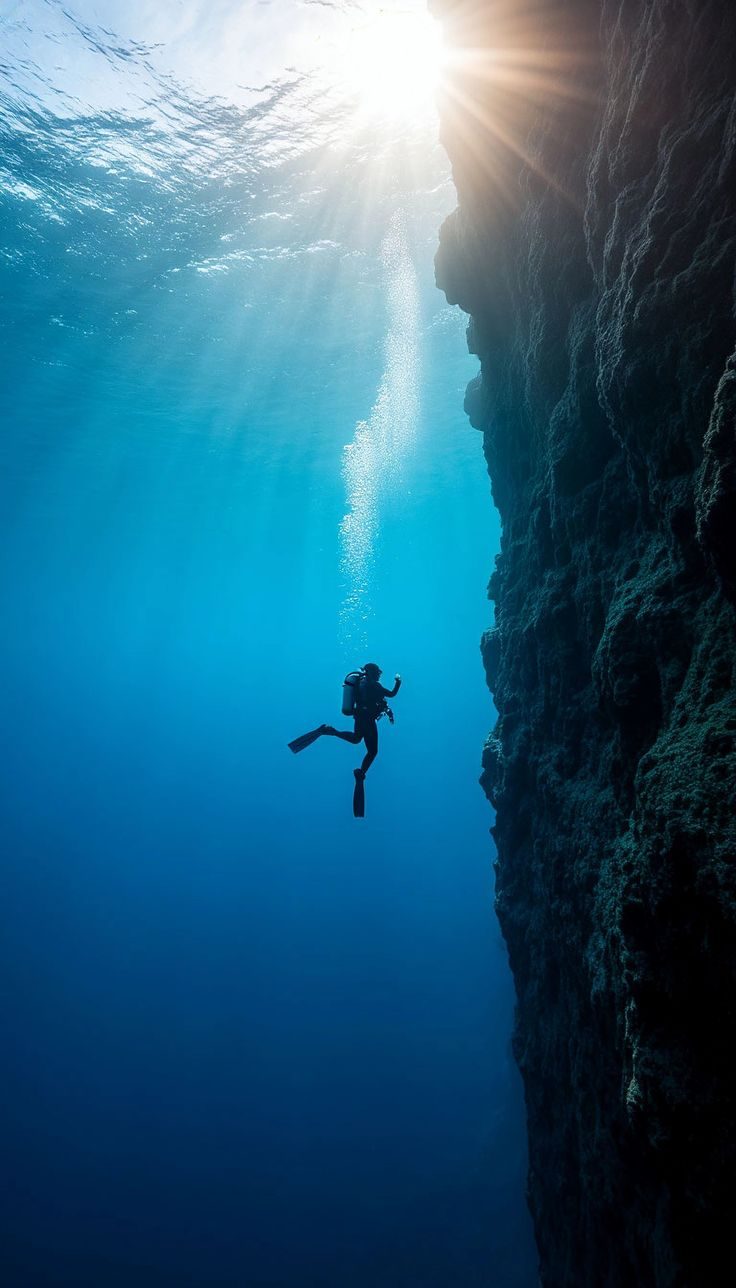
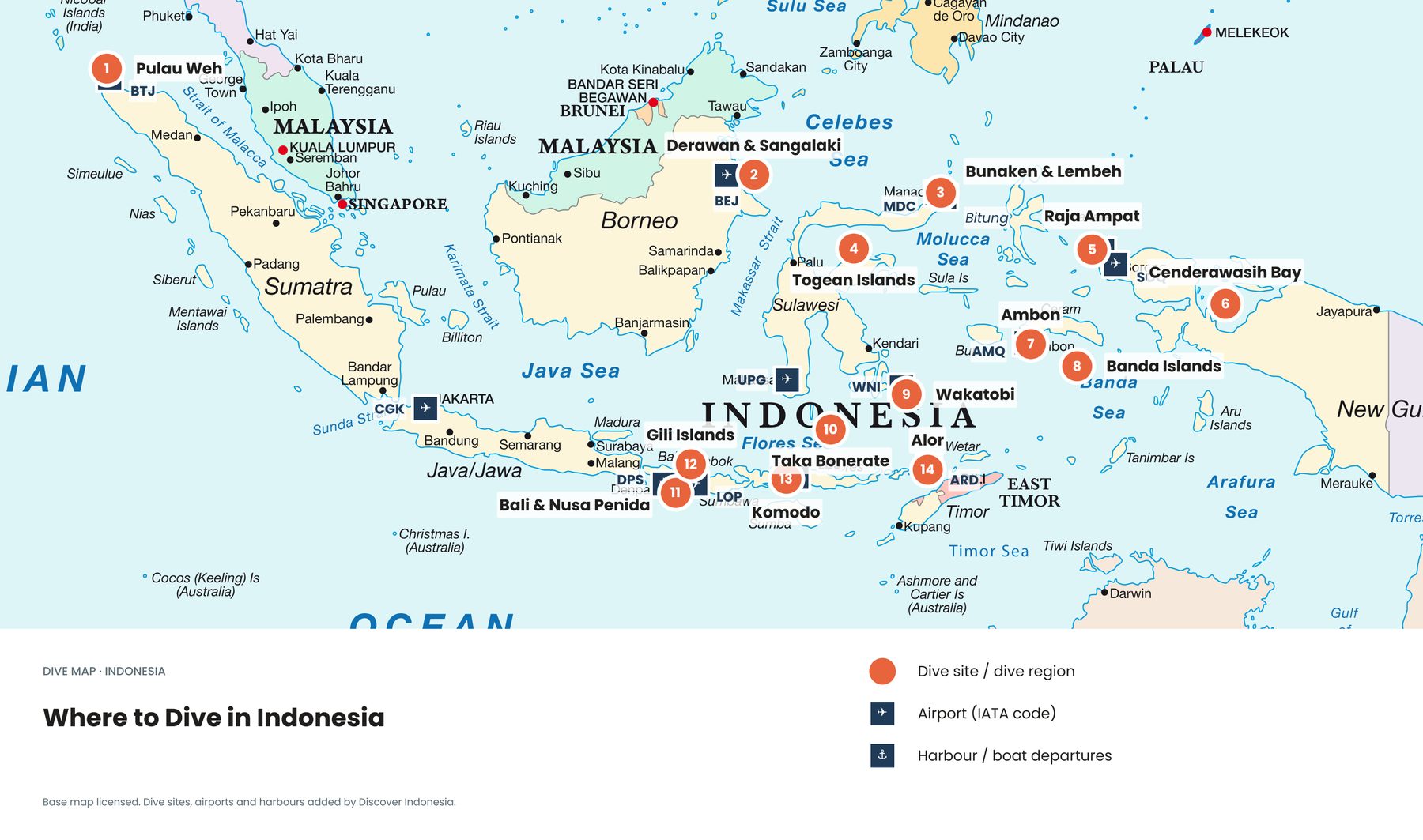
Indonesia stretches more than 5,000 kilometres from east to west, and almost all of it is reef. That's the challenge: where do you start? This map shows the fourteen regions divers travel for, with the nearest airport for each.
The regions, west to east
- Pulau Weh, SumatraThe northern tip of Indonesia, reached by ferry from Banda Aceh (BTJ). Walls, big schools of fish and very few other divers.
- Bali & Nusa PenidaThe easiest start, via Denpasar (DPS). The USAT Liberty wreck at Tulamben, manta rays and seasonal mola mola at Nusa Penida. Read our Bali dive guide →
- Gili IslandsOff Lombok (LOP). Turtles on almost every dive and plenty of easy sites for beginners.
- KomodoVia Labuan Bajo on Flores. Strong currents, manta rays and some of the fishiest reefs in the country. Dive guide →
- AlorFar east of the Lesser Sundas (ARD). Cold, clear water, steep walls and powerful currents. Dive guide →
- Taka BonerateA national park in the Flores Sea and one of the largest atolls in the world. Remote and mostly reached by liveaboard. Dive guide →
- Derawan & Sangalaki, BorneoVia Berau (BEJ). Manta rays, green turtles and Kakaban's inland lake of stingless jellyfish.
- Togean Islands, SulawesiIn the calm Gulf of Tomini. Hard to reach, which keeps it quiet.
- Bunaken & Lembeh, North SulawesiVia Manado (MDC). Bunaken's vertical walls, and the Lembeh Strait, one of the world's best places for muck diving and rare small creatures. Dive guide →
- Wakatobi, Southeast SulawesiA national park named after its four main islands, with its own airport on Wangi-Wangi (WNI). Healthy reefs, far from the crowds. Dive guide →
- Ambon, MalukuMuck diving in Ambon Bay, with critters to rival Lembeh.
- Banda Islands, MalukuThe historic nutmeg islands. Walls, big fish, and a reef that has regrown on the lava flow of the Gunung Api volcano.
- Raja Ampat, West PapuaVia Sorong. The highest reef fish diversity ever recorded, and the dream destination for most divers. Dive guide →
- Cenderawasih Bay, PapuaWhere whale sharks gather around the floating fishing platforms called bagans.
Why the currents matter
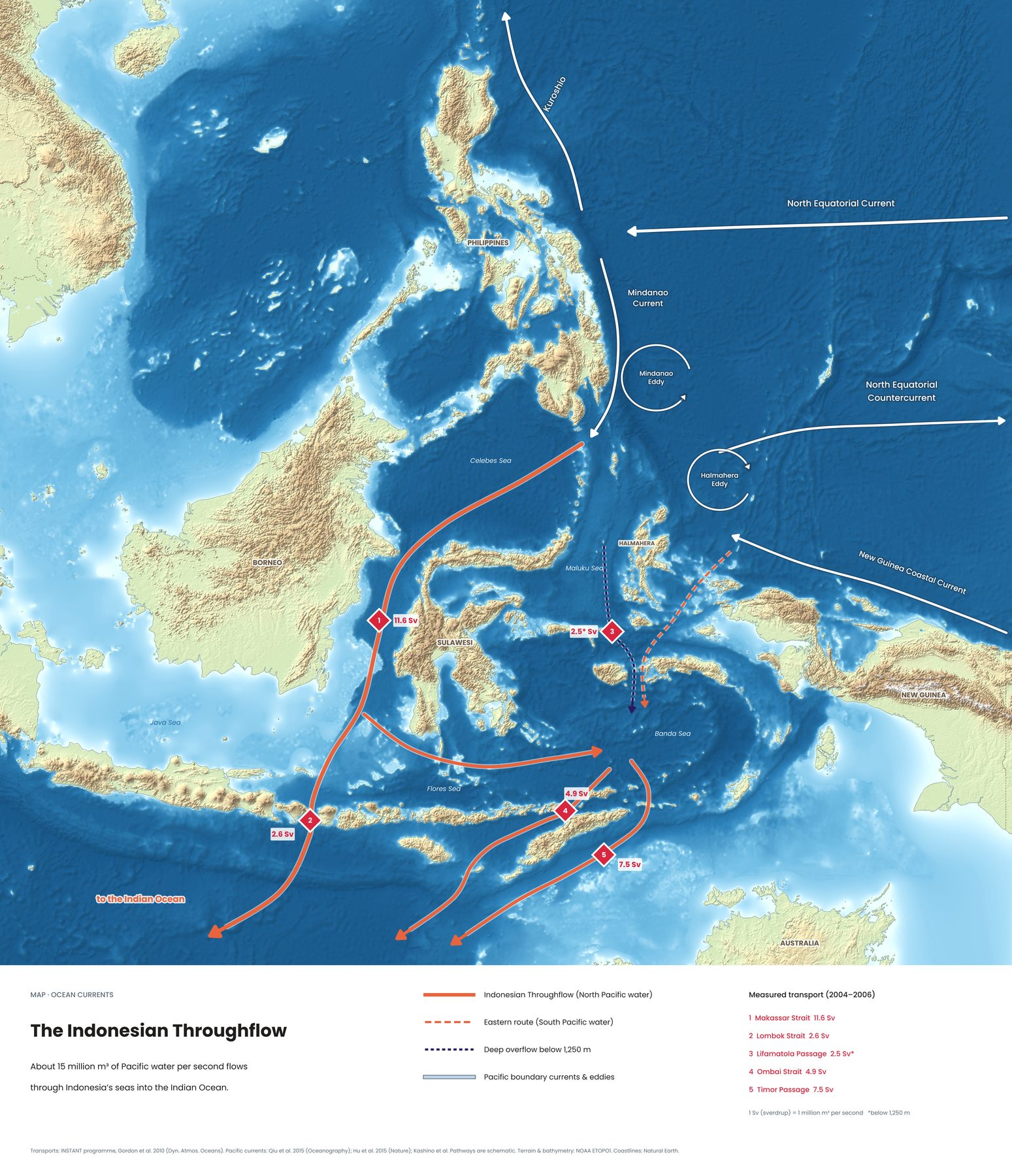
Most of Indonesia's best diving sits where the ocean is forced through narrow straits. Pacific water flows through the archipelago into the Indian Ocean. Oceanographers call this the Indonesian Throughflow, and it brings nutrients, plankton and big animals with it. It also brings currents strong enough to need experience, and sudden drops in water temperature. That's why Nusa Penida, Komodo and Alor are best left until you have some drift dives behind you.
When to go
There's no single dive season in a country this big. Here's the general pattern:
| Bali, Lombok, Komodo | Dry season, roughly April to November, brings the calmest seas and best visibility. Many sites can be dived year-round. |
|---|---|
| Raja Ampat | Usually best from October to April, when seas are calmer and most liveaboards operate. |
| North Sulawesi | Diveable all year. The windier months bring rougher crossings to Bunaken. |
Regional guides: Lesser Sunda Islands · Sulawesi · Papua & Maluku
Conditions change year to year, and every region has its own local pattern. Check with your dive operator before booking, especially for seasonal animals like mola mola, hammerheads or whale sharks.
Where to start
- First dives or newly certified: Bali's Tulamben and Amed, the Gili Islands, or Bunaken.
- Experienced and want big fish: Komodo, Nusa Penida, Alor.
- Photographers: Lembeh and Ambon for small creatures, Raja Ampat for reefscapes.
- Want the reef to yourself: Wakatobi, the Togean Islands, Banda.
Sources
- Base map licensed; dive sites, airports and harbours added by Discover Indonesia
- INSTANT programme, Gordon et al. 2010 (throughflow transport)