Wakatobi takes its name from four islands: Wangi-Wangi, Kaledupa, Tomia and Binongko. It's far from the usual travel routes, and that's exactly why its reefs are among the healthiest in Indonesia. This map covers the dives worth the journey.
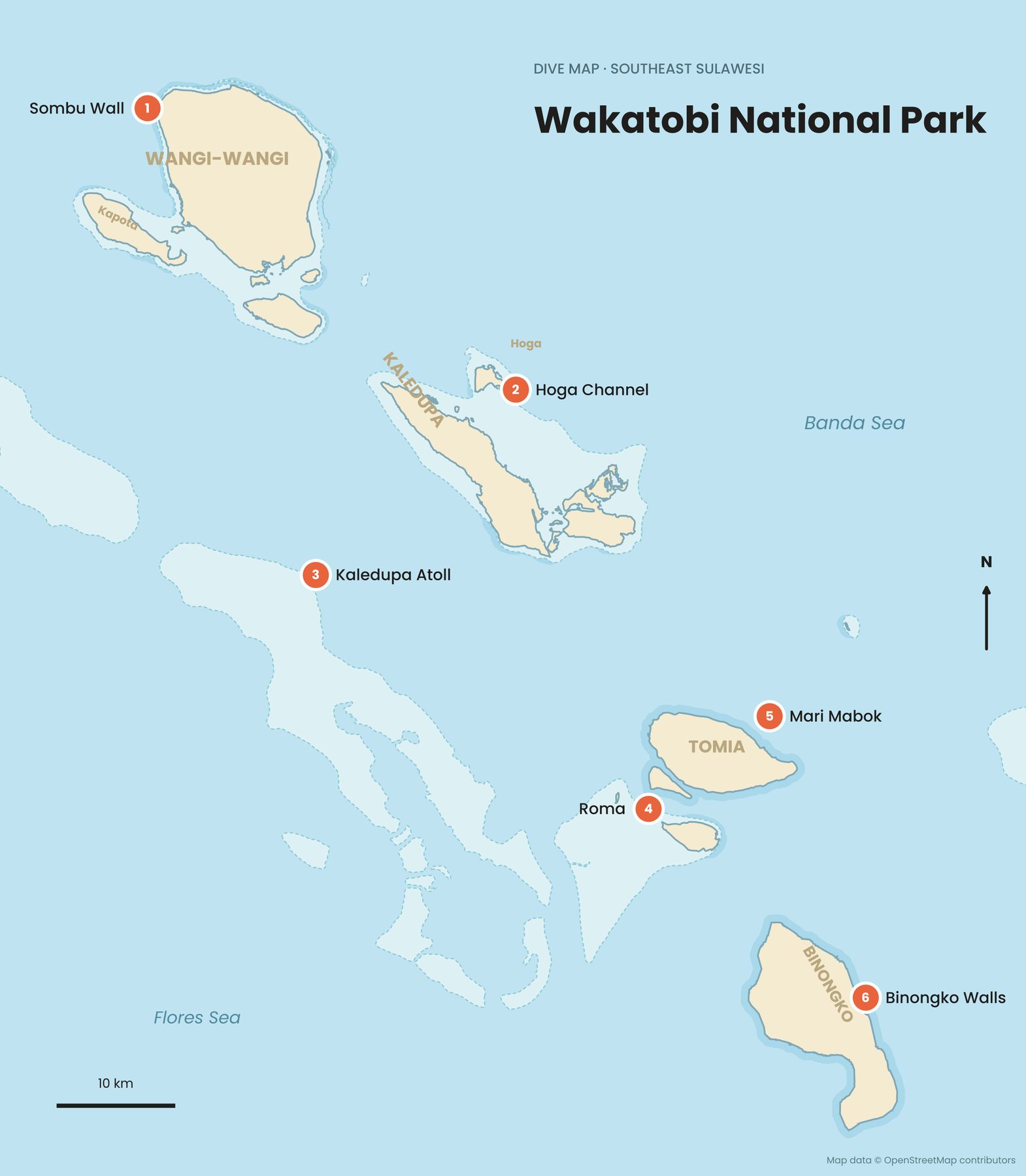
A park built around four islands
Wakatobi National Park lies off the southeast corner of Sulawesi, where the Banda Sea meets the Flores Sea. It's also a UNESCO biosphere reserve. Long atolls and fringing reefs surround the islands, and the Bajau, a seafaring people, have lived here on and around the water for generations.
The sites, north to south
- Sombu Wall, Wangi-WangiA wall on the island's northwest coast, close to the main town and airport. An easy first dive after arrival.
- Hoga ChannelBetween Kaledupa and the small island of Hoga, home to a marine research station. Sloping reefs and walls with a lot of life.
- Kaledupa AtollA long reef system west of Kaledupa, with shallow tops and walls on the outer edge.
- Roma, TomiaA submerged reef off Tomia, often with current and big schools of fish.
- Mari Mabok, TomiaOne of Wakatobi's best-known dives: walls and pinnacles covered in hard and soft corals.
- Binongko WallsThe most remote of the four islands, with steep walls on its eastern side. Rarely dived and worth it.
Practical information
- Getting there: Wangi-Wangi has the Matahora airport (WNI), with flights from Sulawesi. Ferries also run from Kendari and Bau-Bau. Boats link the islands, though schedules can be irregular.
- Where to stay: Tomia and Hoga are popular bases for divers. Wangi-Wangi has the most guesthouses and the best connections.
- Plan extra time. Wakatobi is remote, and connections don't always line up. A buffer day at either end makes the trip much more relaxed.
- Park fee: the national park charges an entry fee that supports conservation and local communities.
Frequently asked questions
What does Wakatobi mean?
It's made from the first letters of the four main islands: Wangi-Wangi, Kaledupa, Tomia and Binongko.
Is Wakatobi good for snorkelling?
Yes. Many reefs start in very shallow water right off the islands, especially around Hoga and Tomia.
Sources
- Map data © OpenStreetMap contributors, ODbL