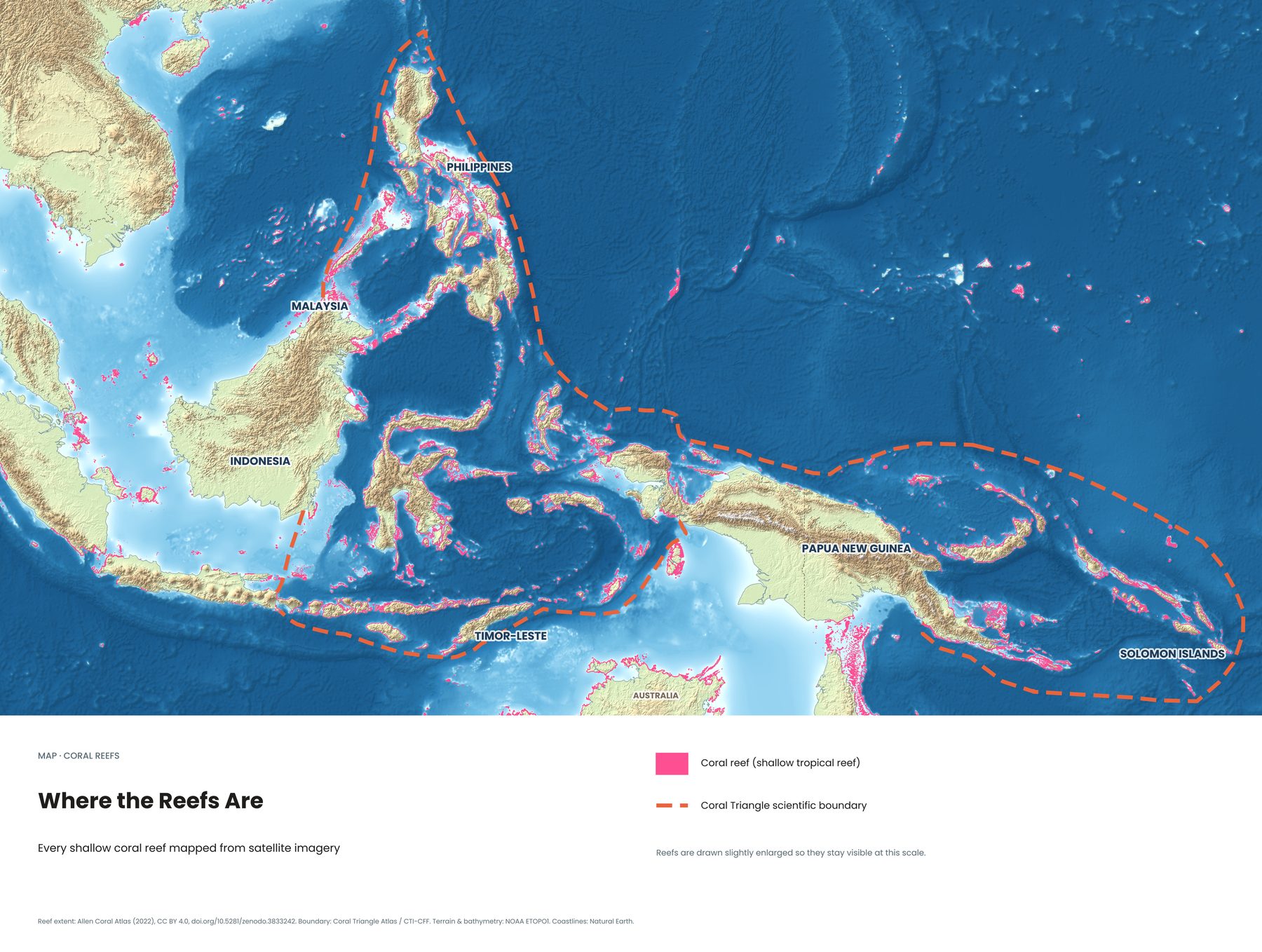
Komodo is famous for its dragons, but divers come for the water. This is where two oceans meet in narrow channels, and the reefs are some of the richest on the planet. The catch is the current. Here's where to dive and how to do it safely.
Two seas, two kinds of diving
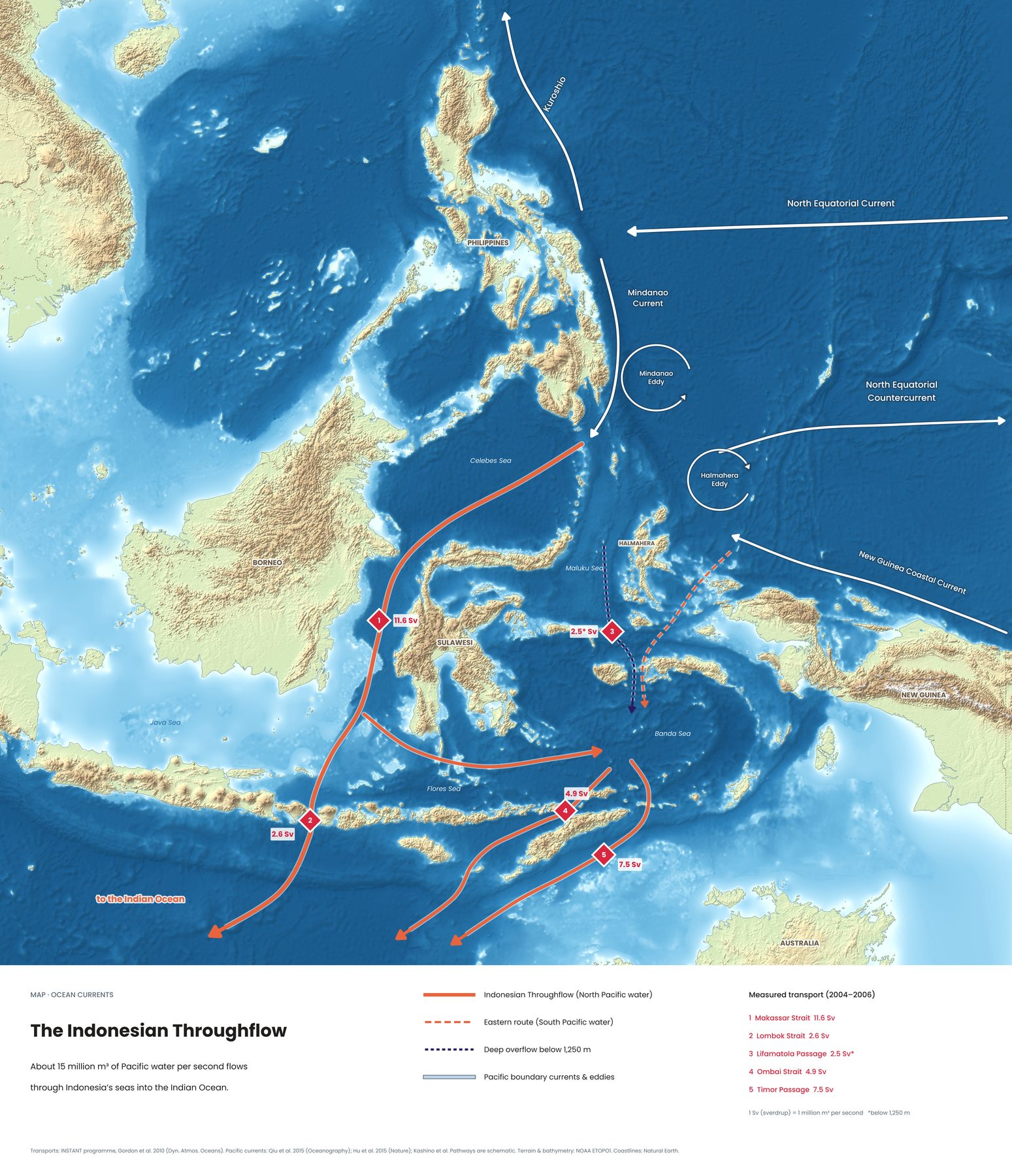
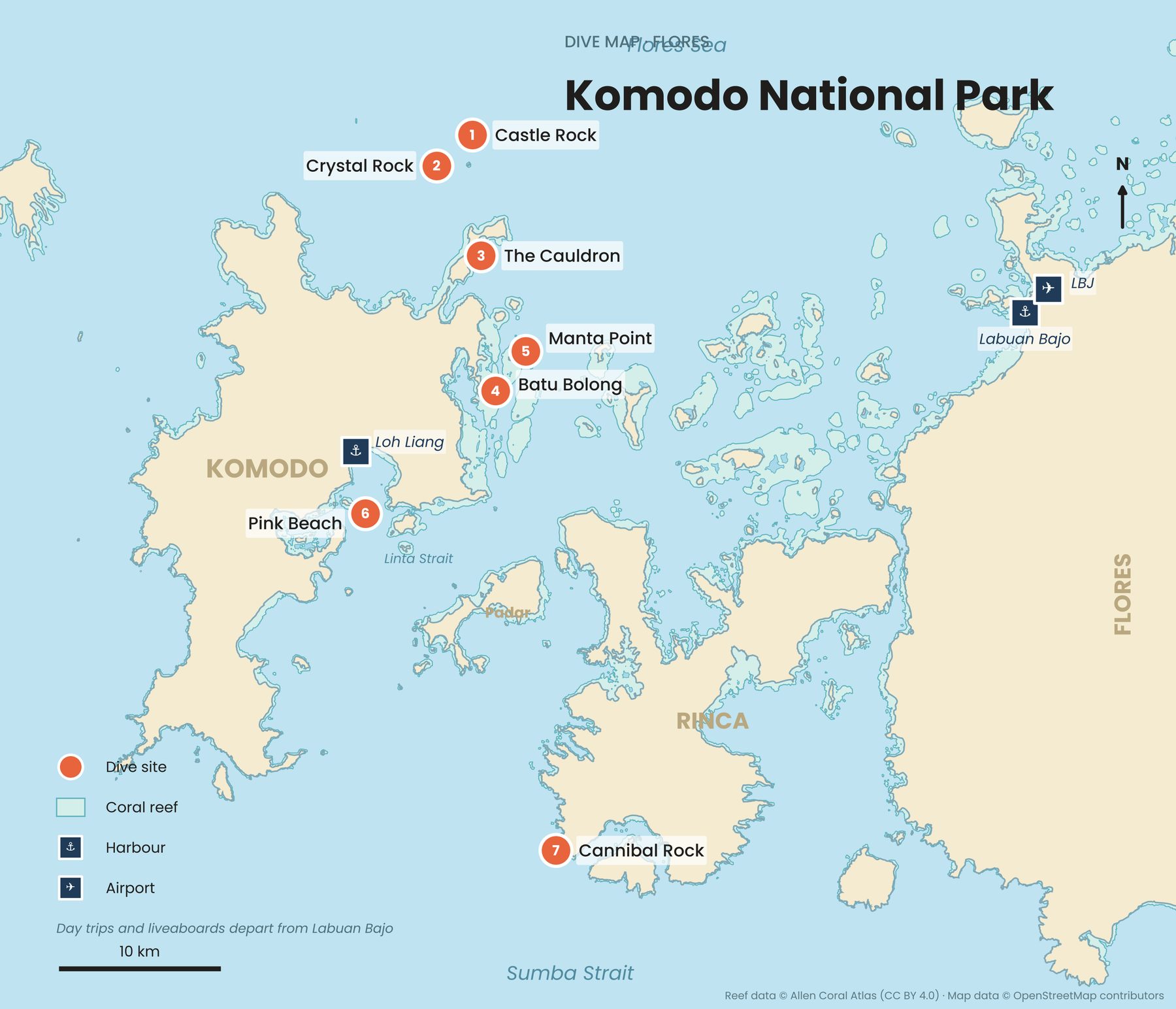
The park sits between the warm Flores Sea to the north and the cooler Sumba Strait to the south. Water moves between them through the gaps between Komodo, Padar, Rinca and Flores, and the tides drive it hard. The north is usually warmer with clearer water and big schools of fish. The south is colder and greener with plankton, which brings small creatures and manta rays.
The north: big fish and fast water
- Castle RockA submerged pinnacle in open water. Clouds of fish, reef sharks and trevally hunting in the current. Negative entries are common, so you descend quickly. Advanced divers.
- Crystal RockCastle Rock's neighbour, with a tip that breaks the surface at low tide. Usually clear water, colourful soft corals and lots of fish.
- The CauldronAlso called "Shotgun". A sandy bowl that funnels into a narrow channel, where the current shoots you through to the other side. Unforgettable if conditions are right.
The centre: mantas and the famous rock
- Batu BolongA small rock island with a hole through it, sitting right in the current. The sheltered side is covered in coral and fish. Often called one of the best dive sites in Komodo.
- Manta PointA shallow drift over rubble and reef where manta rays come to feed and be cleaned. Even snorkellers can see them on a good day.
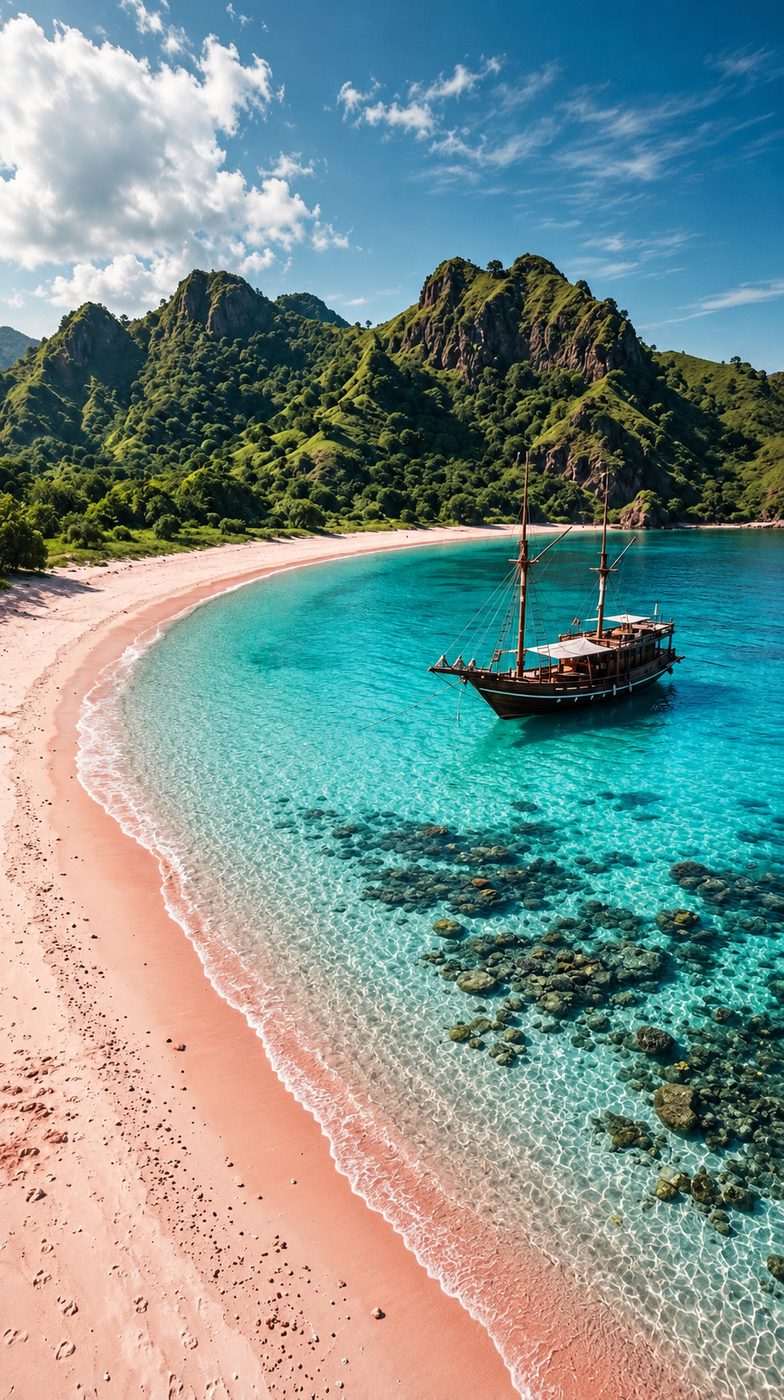
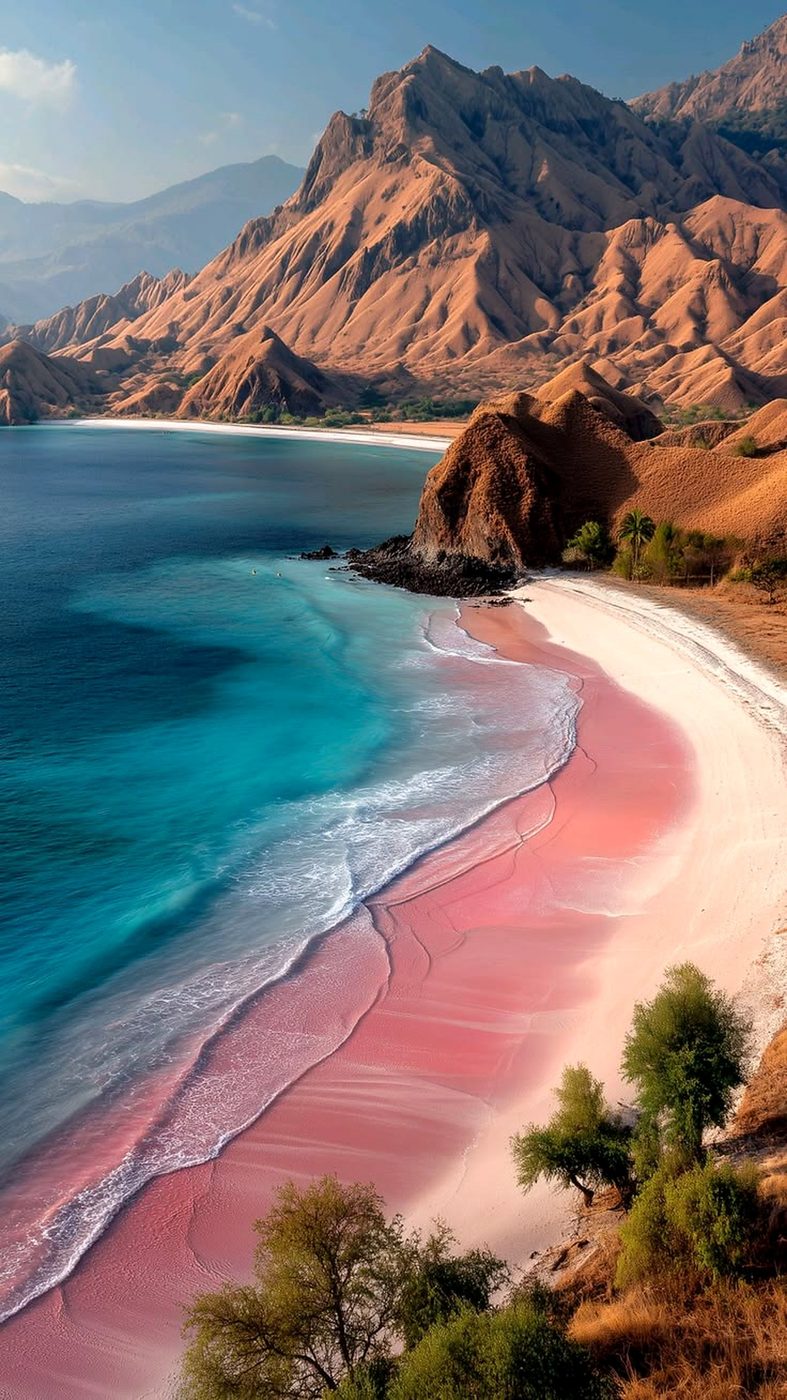
- Pink BeachGentle sloping reef off the beach with the pinkish sand. A good first dive in the park, and great snorkelling.
The south: cold water and critters
- Cannibal RockOff the south of Rinca. Cooler, nutrient-rich water and a rock covered in sea apples, frogfish and nudibranchs. Mostly visited by liveaboards.
Diving the currents safely
- Dive with a local guide who plans around the tides. The same site can be gentle at one hour and dangerous an hour later.
- Carry a surface marker buoy (SMB) and know how to deploy it. Boats need to see you after a drift.
- Get some drift-dive experience first. The north sites are not where you want your first current dive.
- Watch for down-currents. If you get pulled down, move away from the reef edge and towards open water or the shallows, as your guide briefed.
Getting there and when to go
Fly to Komodo Airport in Labuan Bajo (LBJ) on Flores. From there, dive centres run day trips into the park and liveaboards head out for three days or more. Liveaboards can reach the remote north and south sites that day boats can't. Komodo can be dived all year. Conditions vary with the seasons, so ask your operator which areas are best when you travel.
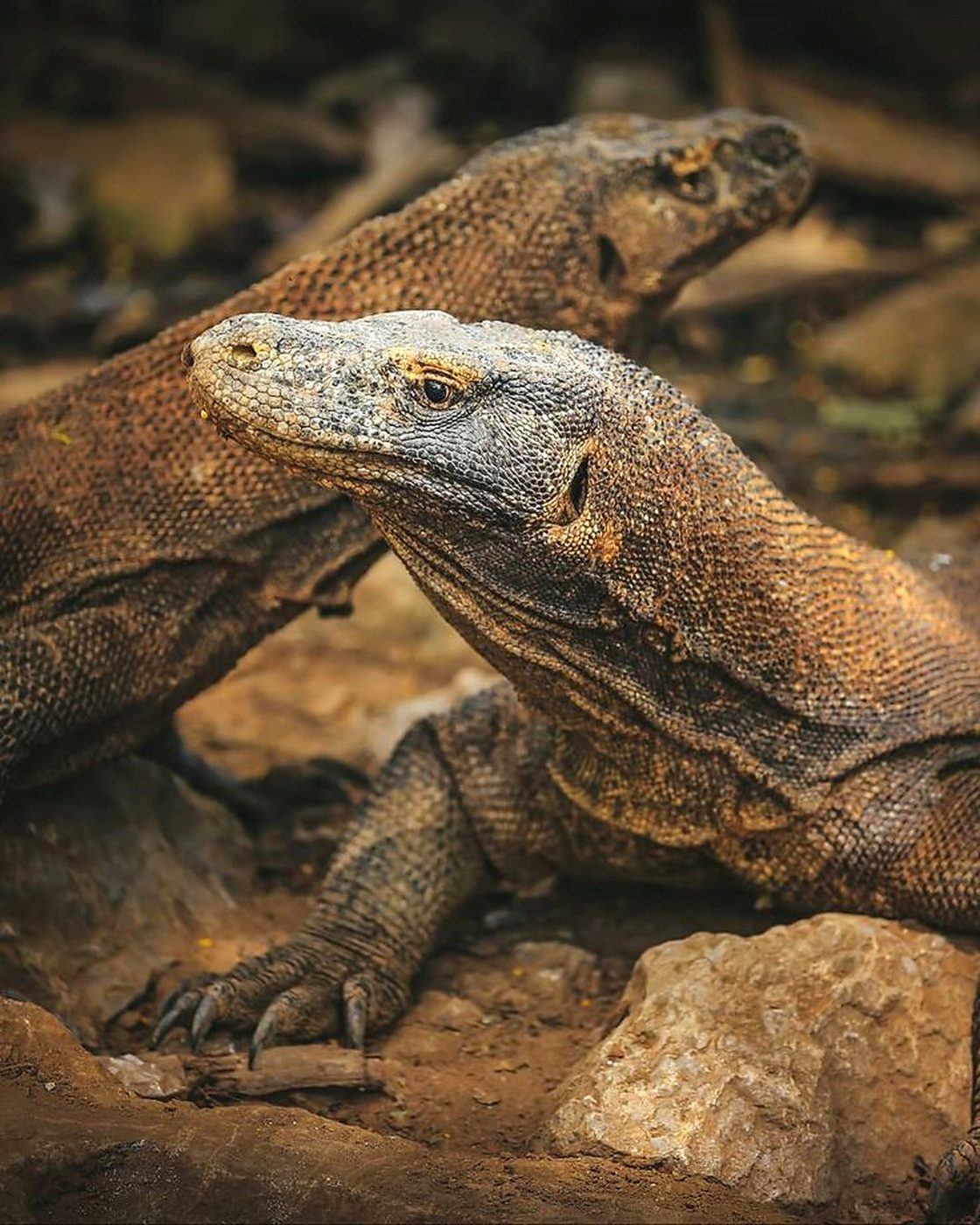
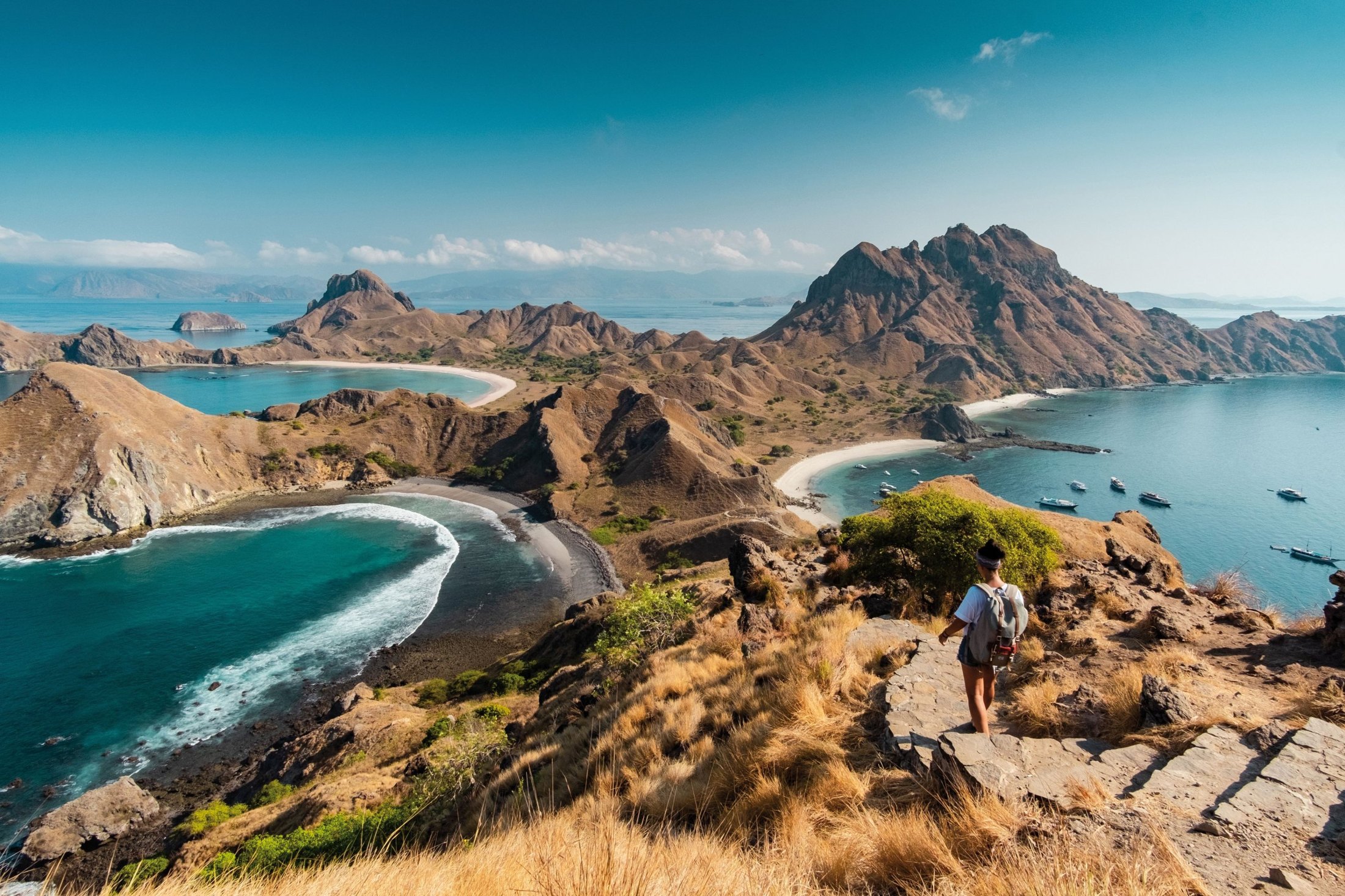
Don't skip the land: the Komodo dragons live on Komodo and Rinca islands, and the viewpoint on Padar is one of the most photographed in Indonesia. A national park entry fee applies.
Frequently asked questions
Is Komodo good for beginners?
Some sites are, such as Pink Beach and sheltered reefs in the centre of the park. Most of the famous sites have strong currents and are better after you've logged some drift dives.
Can I see manta rays in Komodo?
Yes. Manta Point in the centre of the park is one of the most reliable places in Indonesia to see them.
Sources
- Reef data: Allen Coral Atlas, CC BY 4.0
- Map data © OpenStreetMap contributors, ODbL