Bali and Lombok sit side by side across the Lombok Strait, a half-hour flight apart, yet they feel like different countries. Bali is Hindu, busy and polished; Lombok is mostly Muslim, quieter and rougher at the edges. The right choice depends less on which island is better than on what kind of trip you want. Here is how they compare, and how to see both.
Is Lombok or Bali better?
Neither is better overall; they suit different travellers. Choose Bali for temples, ceremonies, food, a wide choice of places to stay and easy logistics. Choose Lombok for emptier beaches, quieter surf, Mount Rinjani and a slower pace, and accept fewer comforts in return. Many people do both, and the crossing is short.
The difference is mostly one of scale. Bali recorded about 6.95 million direct foreign arrivals in 2025, a record according to Statistics Indonesia. That brings excellent infrastructure, but also traffic and crowds. Lombok has far less tourism. Many beaches have a single warung rather than a row of beach clubs.
| Bali | Lombok | |
|---|---|---|
| Main religion | Balinese Hinduism; temples and daily offerings everywhere | Islam (Sasak majority), with a Balinese Hindu minority in the west |
| Highest volcano | Agung, about 3,000 m, sacred and closed during major ceremonies | Rinjani, 3,726 m, multi-day trek with a crater lake |
| Classic short hike | Batur, 1,717 m, the standard sunrise climb | Senaru to the crater rim, usually two days |
| Beaches | Busy, developed; good facilities | Quieter white-sand bays on the south coast |
| Surf | World-famous breaks, crowded lineups | Beginner bays plus boat-access reefs, usually quieter |
| Diving | Tulamben wreck, Nusa Penida mantas and mola mola | Gili Islands turtles, quieter Sekotong Gilis |
| Main airport | Ngurah Rai (DPS), many international routes | Zainuddin Abdul Madjid (LOP), mostly domestic and regional |
| Tourist infrastructure | Extensive at every budget | Good in Kuta, Senggigi and the Gilis; thin elsewhere |
| Watch out for | Traffic in the south; Nyepi day of silence | Long drives between areas; Rinjani closed in the wet season |
Which island has better beaches?
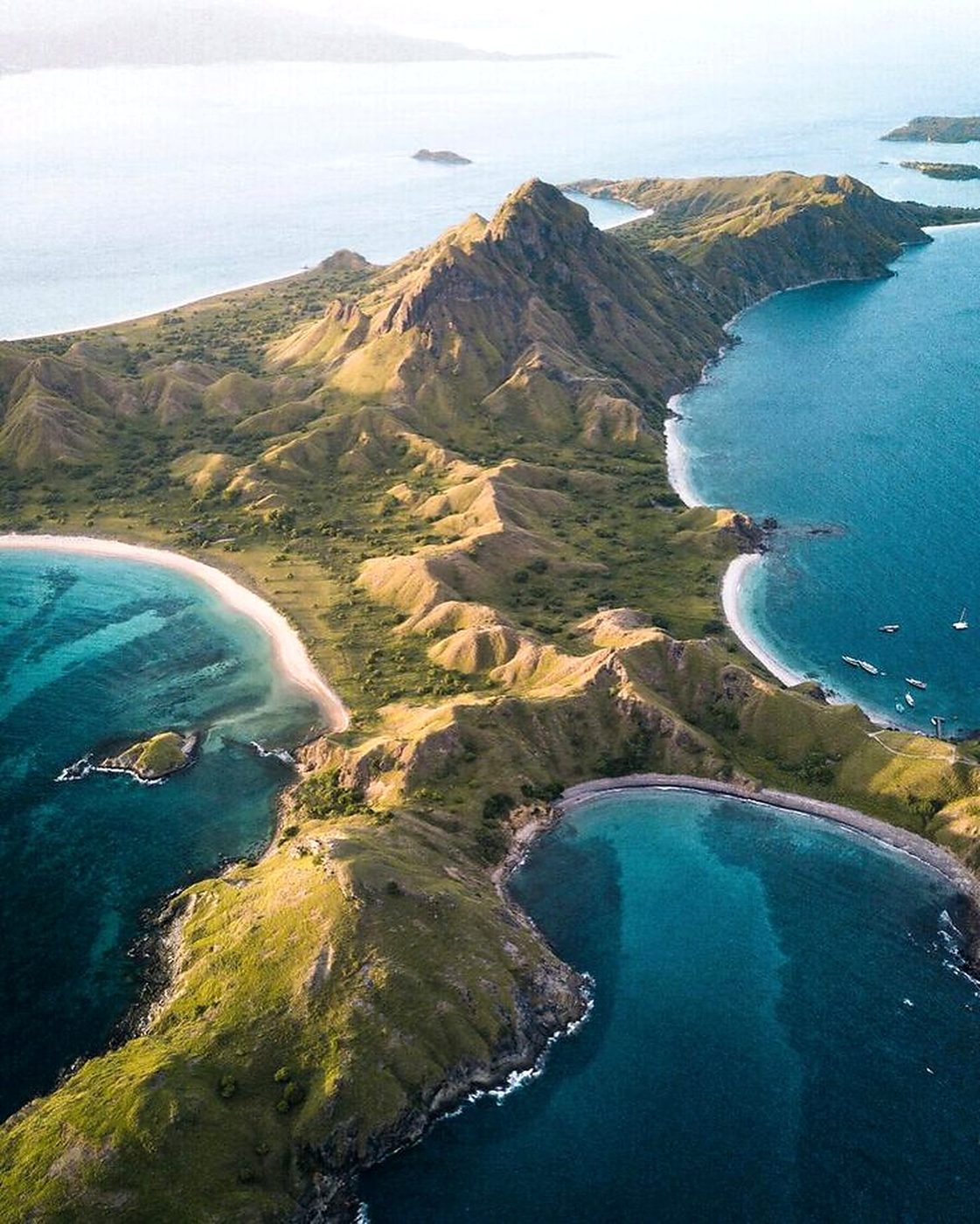
For empty, picture-book bays, Lombok wins. Its south coast around Kuta (Mandalika) is a string of white and golden coves backed by green headlands, and most are far less developed than anything in southern Bali. Bali's beaches are busier, but they have more facilities, more places to eat and stay, and easier access.
Lombok's south coast
- Selong Belanak, west of Kuta, is a long crescent of soft sand with a flat-bottomed bay. Surf shacks rent boards and chairs, and it is the island's best place for a first surf lesson.
- Tanjung Aan, about 15 minutes east of Kuta, is a split bay with a reef and sand shelf, good for swimming at the right tide and for slow, rolling beginner waves.
Kuta Lombok is the base for all of these. It is a small, growing surf town rather than a resort strip, and you will want a scooter or driver because the beaches are spread along the coast.
Bali's beaches
Bali's south has the most beaches people know by name: the long sands of Kuta, Legian and Seminyak, Canggu's black-sand surf beaches, the cliff-backed coves of the Bukit Peninsula around Uluwatu, and the calmer, reef-protected water at Sanur and Nusa Dua. For quieter coastline, go east to Amed and the area around Padangbai, or north to Pemuteran.
Is the surf better in Lombok or Bali?
Bali has the more famous waves and more variety; Lombok has quieter lineups. Bali's reef breaks around the Bukit Peninsula draw surfers from around the world, and its beach breaks host dozens of surf schools. Lombok's waves lean towards longboards and funboards at the beginner bays, with a few serious reefs for experts.
On Lombok, beginners start at Selong Belanak and Tanjung Aan. Gerupuk Bay, east of Kuta, holds several reef breaks that you reach by local fishing boat, from easy insides to heavier outside peaks; it is the step up once you can turn. Desert Point (Bangko-Bangko), on the far southwest tip, is a long, hollow left that works mostly in the dry season and is for experts only. It breaks less often than its reputation suggests.
The dry season, roughly April or May to September or October, brings the most consistent swell to Lombok's south and west coasts. In the wet season, from about November to March, waves are smaller and mellower.
Should I visit the Gili Islands from Bali or Lombok?
The Gilis belong to Lombok: they lie just off its northwest coast, and you can reach them either way. From Bali, direct fast boats take about one and a half hours from Padangbai, or about two and a half from Serangan or Sanur. From Lombok, small boats cross from Bangsal harbour or speedboats from Senggigi in well under an hour.
There are three islands, and they differ. Gili Trawangan is the largest and liveliest, with the most restaurants, bars and nightlife. Gili Meno is the smallest and quietest, with only a few hundred permanent residents. Gili Air, closest to the mainland, sits in between: relaxed but with plenty of places to eat and stay. On all three, cars and motorbikes are banned. You walk, cycle or ride a cidomo, a small horse-drawn cart.
The waters around the three islands have been protected since 2009 as the Gili Matra marine tourism park. That protection is under real pressure. Reporting by Mongabay described thousands of visitors a day, crowded snorkelling sites and damaged reefs from heavy use and dropped anchors; anchoring is now banned. Choose operators that use moorings and keep groups small.
Where is the diving better?
Bali has the more varied and more famous diving; the Gilis are easier and better for learning. Bali offers the USAT Liberty wreck off the beach at Tulamben, the reefs of Amed, Menjangan in the northwest, and manta rays and seasonal mola mola around Nusa Penida, though Penida's currents demand experience. Our guide to diving Bali covers each area on a map.
Around the Gilis, the draw is green turtles, usually seen at 10 to 20 metres, gentle reefs and dozens of dive shops, which makes them one of the most popular places in Indonesia to take an open-water course. Divers after fewer people head to the Sekotong Gilis off southwest Lombok, with calm reefs and few visitors. For how both islands fit into the wider chain eastwards to Komodo and Alor, see diving the Lesser Sunda Islands.
Rinjani or Agung: which volcano should I climb?
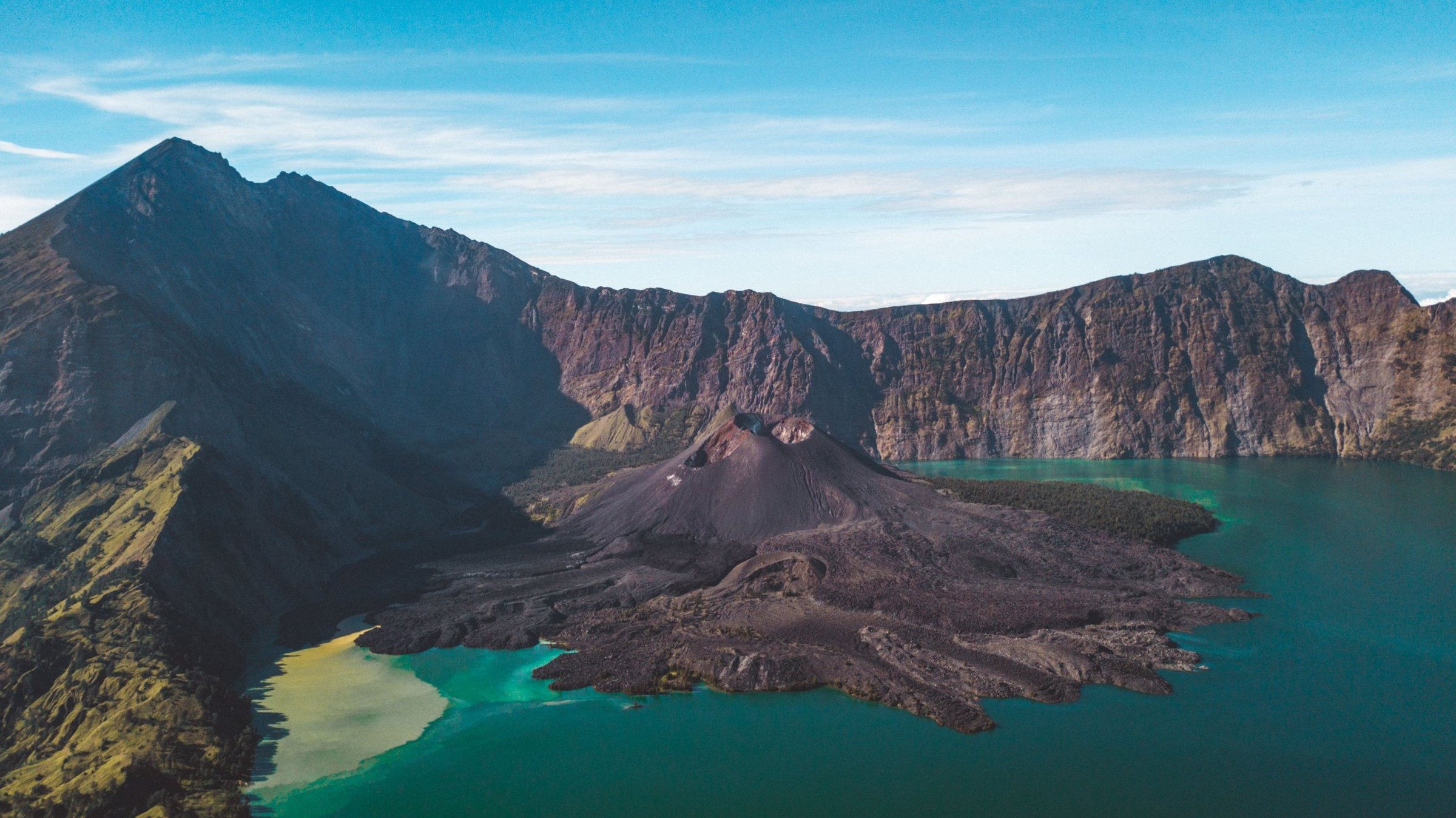
Climb Rinjani if you want a true expedition: two to four days, a night on the crater rim, a summit at 3,726 metres and a descent to the crater lake, Segara Anak. Climb Agung if you have only one night and very strong legs: it is a single, brutally steep pre-dawn push. If you want a gentle taste of volcano trekking, Bali's Mount Batur, at 1,717 metres, is the easy option.
Rinjani, Lombok
Rinjani is Indonesia's second-highest volcano and sits inside Mount Rinjani National Park and the Rinjani-Lombok UNESCO Global Geopark. All treks must be booked through the park's eRinjani system with a licensed operator, guides and porters are mandatory, and the park usually closes all trails from January to the end of March. Rules were tightened after accidents in 2025. Our full guide to climbing Mount Rinjani has the routes, a trekking map and the latest status, and the Rinjani volcano page tells the story of the 1257 eruption that created the caldera.
Agung and Batur, Bali
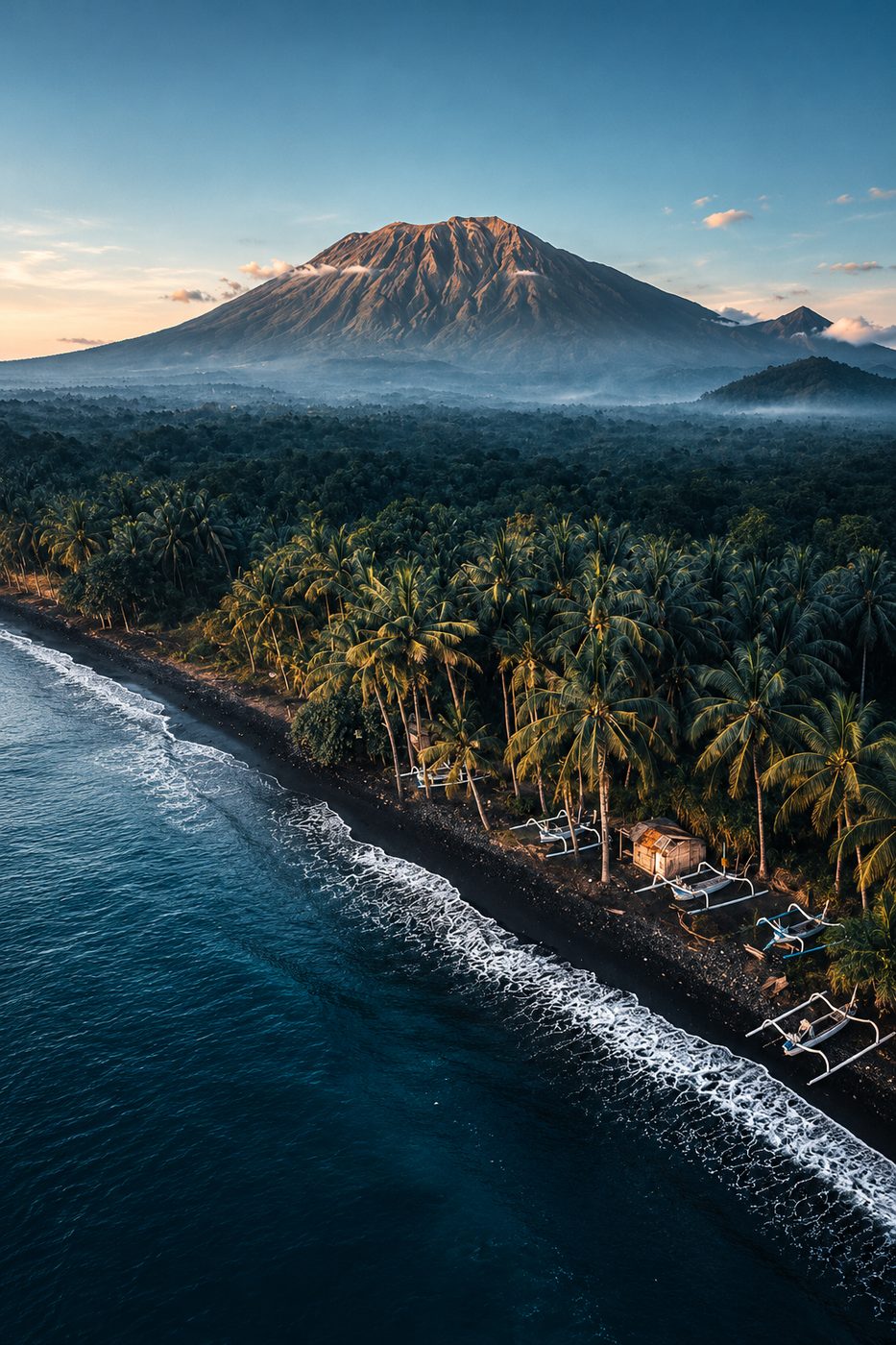
Agung, about 3,000 metres high, is Bali's holiest mountain. The shorter Pasar Agung route reaches the southern crater rim in about three to four hours of climbing; the long Besakih route goes to the true summit and takes most of a day. A registered local guide is required, and tourists caught climbing alone have been deported. The mountain closes during major ceremonies at Pura Besakih, sometimes for weeks. See climbing Mount Agung and the Agung volcano page for details.
Batur, in the Kintamani highlands, is the climb most visitors to Bali actually do: a short night hike to a sunrise over its caldera, a UNESCO Global Geopark since 2012.
Both Agung and Rinjani are active volcanoes. Check the alert level on MAGMA Indonesia, the government volcano service, before you commit to either.
How different is the culture on Lombok and Bali?
Very different. Bali is majority Hindu, and Balinese Hinduism shapes daily life: offerings on doorsteps, temple festivals, processions that close roads. Lombok's majority are Sasak, around 85 percent of the population, and almost all are Muslim. It is often called the "Island of a Thousand Mosques", and you will hear the call to prayer five times a day.
The two islands are entwined. Balinese kingdoms ruled Lombok from the 17th century, and around 10 to 15 percent of Lombok's people are Balinese Hindus, concentrated in the west around Mataram, where you will find Balinese temples. Many Sasak in the north follow or are influenced by Wetu Telu, a local blend of Islam with older beliefs.
Dress and etiquette
- Bali: cover your legs with a sarong and wear a sash at temples; many temples lend them at the gate. Don't step on offerings on the pavement, and don't climb shrines or sacred trees for photos.
- Lombok: swimwear is fine on tourist beaches and the Gilis, but cover shoulders and knees in villages, markets and towns. Remove shoes and dress modestly to enter a mosque.
- Ramadan: during the fasting month, avoid eating, drinking and smoking in public in rural Lombok during the day. Tourist areas stay open but quieter. Dates move each year, so check before you go.
- Nyepi: on Bali's day of silence, everyone stays indoors from 6 a.m. to 6 a.m. and the airport closes. In 2027 it falls on 8 March. Ferries between Padangbai and Lembar also stop for the day.
Is the food different?
Yes, and the difference follows religion. Bali's signature dish is babi guling, spit-roasted suckling pig stuffed with spices, first made for ceremonies and now sold at stalls across the island. On mostly Muslim Lombok, pork is rare outside tourist areas and Balinese communities, and the island's best-known dish is ayam taliwang, grilled chicken coated in a fiery sauce of chilli, garlic and shrimp paste, named after a district of Mataram. It usually comes with pelecing, water spinach in chilli sauce.
Is Lombok getting as crowded as Bali?
Not yet, but it is changing fast, especially in the south. The government declared the Mandalika area around Kuta a special economic zone, and its centrepiece, the 4.3-kilometre Pertamina Mandalika International Circuit, has hosted the Indonesian MotoGP since 2022. The 2026 race ran from 9 to 11 October.
The development has a cost. In March 2021, UN human rights experts raised concerns about land grabs and forced evictions of Sasak communities linked to the Mandalika project, and NGOs have criticised its environmental impact. For travellers, expect construction around Kuta, and avoid race weekends unless you are coming for the MotoGP.
Is Lombok cheaper than Bali?
Generally, day-to-day costs such as local food and simple guesthouses are similar or slightly lower on Lombok, but the overall bill depends on how you travel. Lombok's sights are spread out, so budget more for drivers or scooters. Bali has the widest range at every price level.
One fixed cost applies only to Bali: foreign visitors pay a tourist levy of around IDR 150,000 per person (2026), introduced in February 2024 and paid online through the official Love Bali portal or on arrival. Rinjani treks are the big-ticket item on Lombok; fees have risen recently, so compare several licensed operators.
How do I get from Bali to Lombok?
You have three options: fly, take a fast boat, or take the public ferry. Flying from Denpasar to Lombok takes about 30 minutes in the air. Fast boats go direct to the Gilis and northwest Lombok. The slow public ferry from Padangbai to Lembar is the cheapest and takes four to five hours.
Flights
Several domestic airlines fly the short hop between Bali (DPS) and Lombok (LOP) every day. Lombok's airport, near Praya, is about 30 minutes by car from Kuta Lombok, which makes flying the best choice if you are heading south for the beaches and surf.
Fast boats
Fast boats leave from Padangbai in east Bali (about 1.5 hours to Gili Trawangan) and from Serangan and Sanur in the south (about 2.5 hours). Most stop at the Gilis and some continue to Bangsal or other harbours on Lombok's northwest coast. Book in advance in high season, as they sell out.
Public ferry
The state ferry operator ASDP runs car and passenger ferries between Padangbai and Lembar, in Lombok's southwest, around the clock with departures every one to two hours. The crossing takes four to five hours depending on weather and loading. From Lembar it is about 1.5 to 2 hours by road to Kuta Lombok, or about an hour and a half to Bangsal for the Gilis.
Are the fast boats between Bali and Lombok safe?
Most crossings are uneventful, but the Lombok Strait is open water with strong currents and swell, and accidents happen. In August 2025 a fast boat capsized near Nusa Penida as it approached Sanur in rough seas, killing two passengers, and Bali tourism operators have publicly called for stricter enforcement of maritime safety rules. Treat the choice of boat seriously.
- Pick an established, licensed operator, not the cheapest ticket from a street stall. Check recent reviews for comments on safety and overloading.
- Look before you board. There should be a life jacket for every passenger. If the boat looks overcrowded, it probably is; wait for the next one.
- Travel in the morning. Seas are usually calmer early, and wind tends to build in the afternoon.
- Watch the forecast. Crossings can be rough in the wet-season swells of January and February and in the windy months of July and August. A reputable operator will reschedule rather than run in bad conditions.
When is the best time to visit Lombok and Bali?
The dry season, roughly April to October, is best for both islands: more sunshine, calmer seas, better diving visibility and the most consistent surf. It is also the only time Rinjani is reliably open. July and August are the busiest months on both islands, so book ahead or aim for May, June or September.
The wet season, from about November to March, brings heavy afternoon downpours, rougher crossings and the closure of Rinjani's trails, usually from January to March. Check the dates of Nyepi, Ramadan and the October MotoGP weekend when you plan.
Can I do Bali and Lombok in one trip?
Yes, and two weeks is a comfortable minimum for both. The most efficient loop crosses by fast boat via the Gilis and flies back to Bali from Lombok's airport, so you never retrace your steps.
A sample two-week route
- Days 1–4, Ubud and central Bali. Temples, rice terraces, a dance performance, and the Batur sunrise hike.
- Days 5–6, east Bali. Move to Amed or the coast near Padangbai for snorkelling or the Tulamben wreck, close to the morning fast boats.
- Days 7–9, the Gili Islands. Fast boat from Padangbai. Pick Gili Air or Meno for quiet, Trawangan for nightlife, and dive or snorkel with the turtles.
- Days 10–12, Rinjani. Cross to Bangsal and transfer to Senaru or Sembalun for a three-day trek, booked in advance through a licensed operator.
- Days 13–14, Kuta Lombok. Beaches at Selong Belanak and Tanjung Aan, a surf lesson, then fly back to Bali from the airport near Praya.
With only a week, don't try to do everything: pair Bali with three nights on the Gilis, or fly straight to Lombok and split your time between the Gilis and the south coast.
Our Discover Indonesia guides to Lombok and Bali go further with routes, itineraries, where to stay in each area and practical planning, and they sit together below this article.
Facts checked October 2026. Ferry schedules, fast-boat operators, the Bali levy, Rinjani and Agung access rules and volcano alert levels change often; confirm with ASDP, Love Bali, Mount Rinjani National Park (eRinjani) and MAGMA Indonesia before you travel.
- Bali hits a record of 6.95 million foreign tourist arrivals in 2025 (Antara, citing BPS Bali)
- Tips perjalanan darat dari Bali ke Sirkuit Mandalika (Indonesia Travel, Ministry of Tourism)
- Gili Trawangan (Indonesia Travel, Ministry of Tourism)
- 3 exciting places in Lombok (Indonesia Travel, Ministry of Tourism)
- 26 kapal penyeberangan Lembar-Padangbai stop operasi saat Nyepi (Antara)
- MotoGP Mandalika 2026 held in October (Republika)
- Le circuit de Mandalika, vitrine sportive et pari économique pour Lombok (Le Petit Journal)
- Indonesia: UN experts flag rights concerns over $3bln tourism project (UN OHCHR statement, 2021)
- Ancaman pariwisata massal terhadap lingkungan Gili Matra (Mongabay Indonesia)
- Lombok surf and Lombok's surf coast (The Surf Atlas)
- Getting to the Gilis (Manta Dive Gili Trawangan)
- Second ferry disaster in a month raises safety concerns (Boating NZ)
- Bali tourism operators call for urgent maritime safety reforms (TTG Asia)
- Travel tips for boat trips from Bali (Honeycombers)
- New tourist tax in Bali from Feb 14 (AAP)
- Hari Raya Nyepi (Office Holidays)
- Batur (Smithsonian Global Volcanism Program)
- Sasak people and Ayam taliwang (Wikipedia)