Komodo National Park is not a cheap place, but most overspending comes from booking the wrong boat, in the wrong month, with the wrong expectations. Since April 2026 the park also caps visitors at 1,000 a day and sells every ticket online. Here is how to plan a trip that is good value, legal and safe.
Can you visit Komodo National Park on a budget?
Yes, if you budget for the boat rather than the hotel. The park itself is islands and sea, so every visit means a boat out of Labuan Bajo on Flores, and the boat is where most of your money goes. Sharing a boat with other travellers, travelling outside July and August, and comparing what each operator actually includes will save far more than any cheap room.
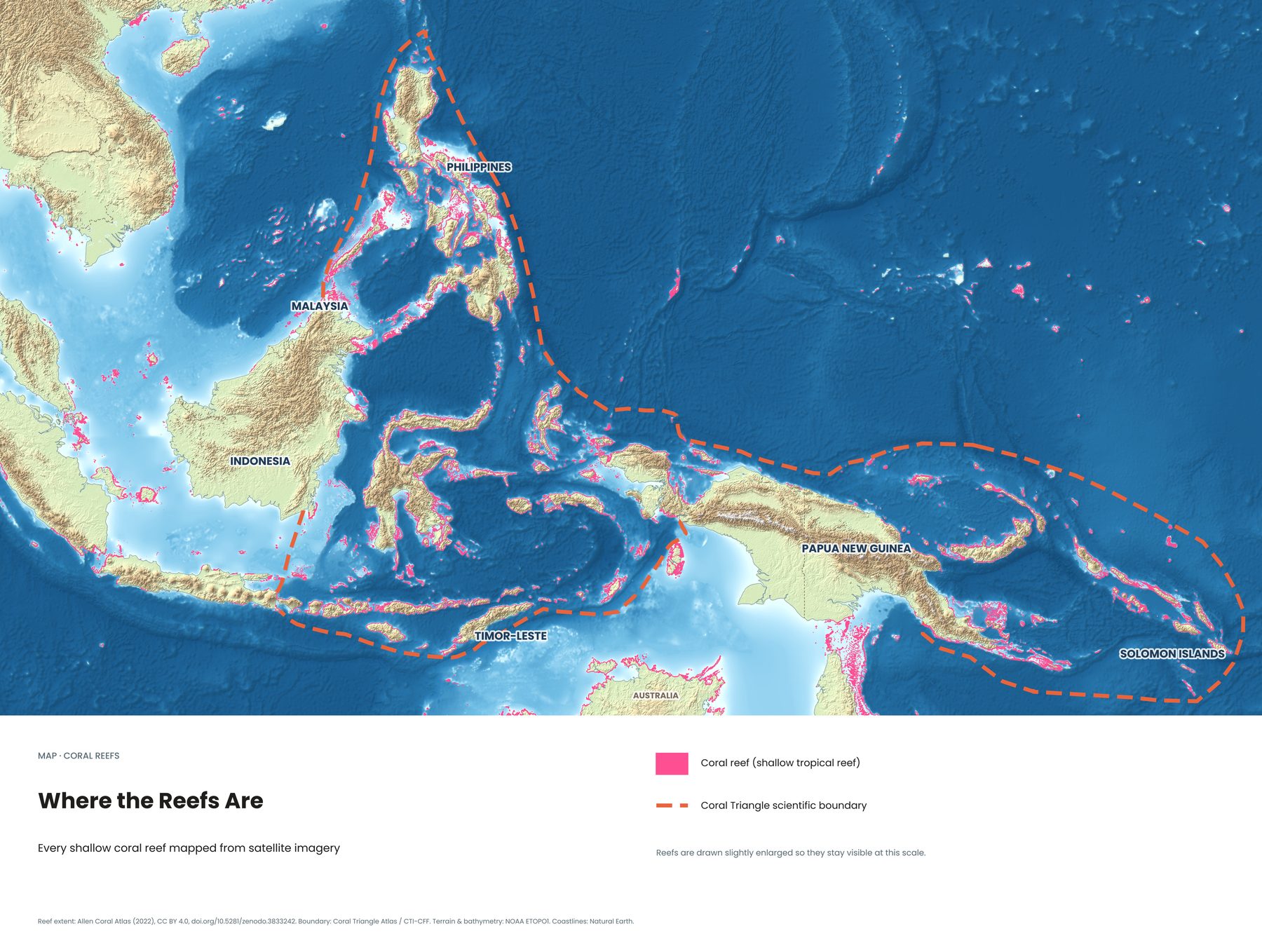
The park was created in 1980 and became a UNESCO World Heritage Site in 1991. It covers about 1,733 square kilometres, of which only around 603 are land: three larger islands, Komodo, Rinca and Padar, plus more than two dozen smaller ones. Everything else is water, and much of the value of a trip lies under it, on reefs fed by the strong currents that run between the Flores Sea and the Sumba Strait.
The realistic budget plan has three parts. Get to Labuan Bajo cheaply, sleep simply in town, then spend on one good boat trip with a reputable operator.
What do Komodo park fees cost in 2026?
Foreign visitors pay an entrance fee of around Rp250,000 per person per day in 2026, the same on weekdays and holidays. On top of that come a harbour fee of around Rp25,000 per person, a ranger fee for each small group that walks on Komodo, Rinca or Padar, and a diving surcharge of around Rp25,000 per diver per day. Most tour operators collect all of this for you, so ask whether it is in the price.
The entrance rate comes from Government Regulation 36 of 2024 on non-tax state revenue, which the park office applied from 30 October 2024. That regulation raised the domestic weekday ticket from Rp35,000 to Rp50,000 and set a single Rp250,000 rate for foreigners, replacing the old split of Rp150,000 on weekdays and Rp225,000 on Sundays and holidays. Ranger fees are charged per group of up to five people, but published figures for them differ between operators, so check the current amount when you book. A drone permit is separate and expensive, around Rp2 million per drone per day.
Local government levies can also apply in addition to the national park fees. Rules have changed several times in a few years, so the safest approach is to ask any operator for an itemised breakdown before you pay a deposit.
The quota and online booking
Since 1 April 2026 the Komodo National Park Office has limited the park to 1,000 visitors a day. According to Antara, the cap covers Komodo, Rinca and Padar and 23 dive sites around them. The park recorded 429,509 visits in 2025, above the carrying capacity of roughly 366,000 a year cited by the park office, and officials have warned that heavy visitor pressure can change dragon behaviour, making them less wary of people.
Tickets are now sold through SiOra, the government's online reservation system for nature tourism, and operators report that walk-in tickets are no longer available. You will need passport details for every person. Your boat operator normally handles the booking, but only if you book early enough. Several operators report that July and August dates fill weeks in advance, while the shoulder months are far easier.
Why the fees became a fight
Komodo's prices have been argued over for years. In 2019 the governor of East Nusa Tenggara proposed closing Komodo Island to tourists for a year; the plan was eventually shelved and managed visitor numbers became the alternative. In 2021 UNESCO's World Heritage Committee asked Indonesia to halt tourism construction in and around the park, including a new visitor complex at Loh Buaya on Rinca, and the government went ahead, saying the design reduced direct contact between tourists and dragons.
The biggest row came in 2022, when the province announced a fee of Rp3.75 million per person for Komodo and Padar. Tourism workers in Labuan Bajo went on strike from 1 August 2022, the increase was first postponed and then cancelled in December 2022. In 2025 the Forestry Minister called Padar overcrowded, promised fences, signs and tighter numbers at its viewpoint, and said a proposed villa development on the island still needed UNESCO review and public consultation. The 2026 quota is the latest step in that long argument about how many people the islands can take.
Day trip, 2D1N or 3D2N: which boat trip is best value?
For most budget travellers, a shared two-day, one-night trip on a wooden boat is the best balance of cost and experience. A speedboat day trip is cheaper overall and covers the famous stops, but it is rushed and spends a lot of time at speed in open water. A three-day, two-night trip adds quieter snorkel sites and more time in the water, and suits people who care about reefs as much as dragons.
| Trip type | Good for | Trade-offs |
|---|---|---|
| Shared speedboat day trip | Short stays, tight budgets, the classic highlights in one go | Very early start, late return, short stops, crowded at the main sites, rough in wind |
| Shared 2D1N on a wooden boat | The best value for most people; sunrise on Padar and a night at anchor | Basic cabins or deck mattresses, shared bathrooms, fixed itinerary |
| Shared 3D2N | Snorkellers and slower travellers; more reef time | Costs more; same comfort level as 2D1N |
| Private boat | Groups who can split the cost; flexible timing | Expensive for couples; you still need quota and park tickets |
A typical day trip strings together Padar, Pink Beach, a ranger-led dragon walk on Komodo or Rinca and one or more snorkel stops such as Manta Point, starting very early and returning late in the afternoon. Overnight trips cover the same places at a more humane pace, usually timing Padar for sunrise when the light is soft and the heat bearable.
The larger traditional wooden sailing ships, known as phinisi, range from simple to luxurious. On the budget end, expect a cabin with a fan or a mattress on deck, simple Indonesian meals and shared toilets.
What is usually included
A shared boat trip normally includes transport, a guide, meals on board, drinking water and snorkel gear. Park entrance, ranger and harbour fees are sometimes included and sometimes paid separately. Alcohol, wetsuits, dive equipment and hotel transfers vary. If Manta Point matters to you, confirm it is on the itinerary: not every boat goes there.
Komodo or Rinca: where is it best to see the dragons?
Both islands give you a very good chance of seeing wild Komodo dragons on a ranger-led walk. Komodo Island, entered at the Loh Liang ranger station, has the larger population and longer walking routes. Rinca, entered at Loh Buaya, is closer to Labuan Bajo, so it suits short trips, and since 2022 it has had a new visitor complex with raised walkways.
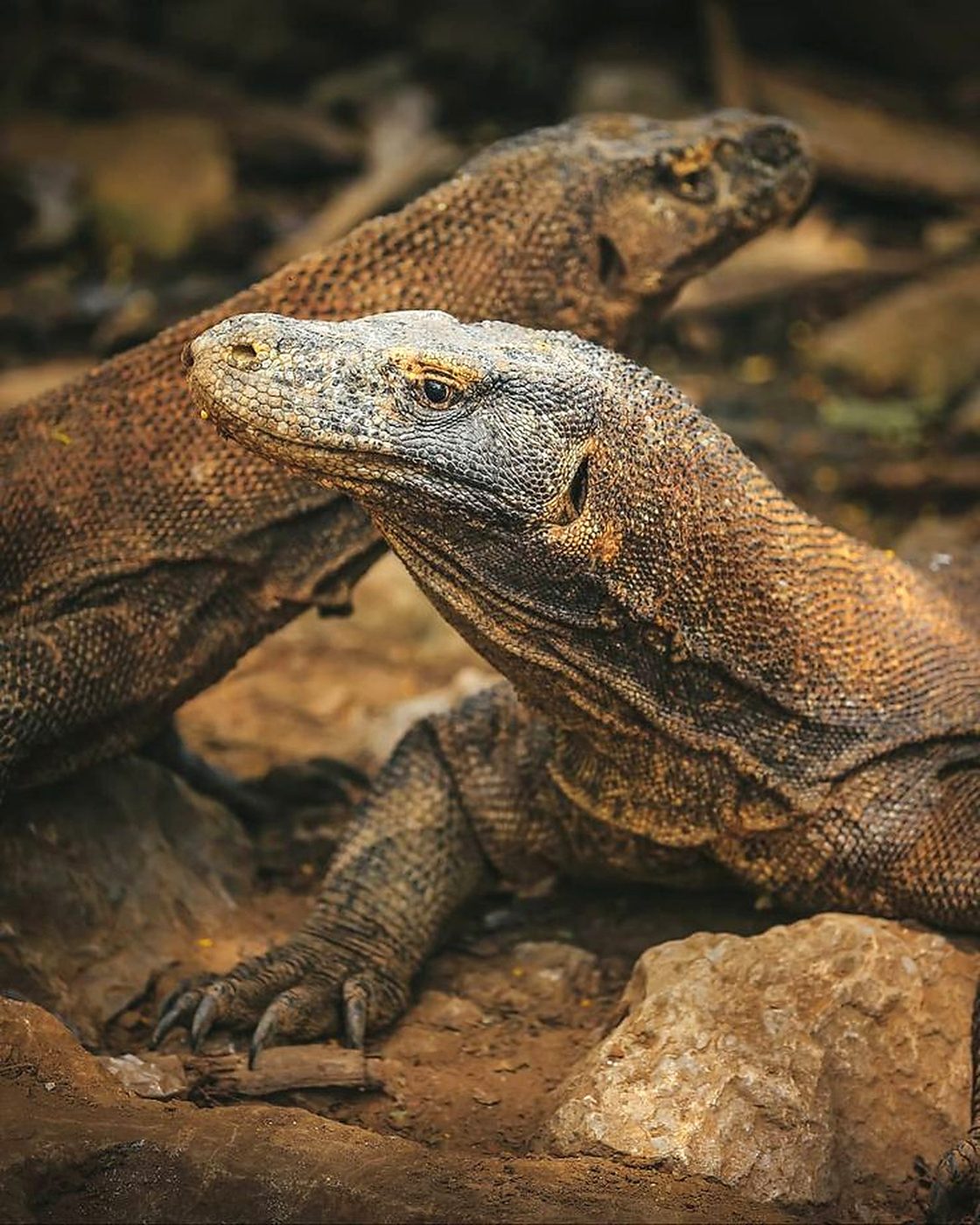
The park authority counted around 1,600 dragons on Komodo Island in 2025, and Rinca holds a population in the same order of magnitude. There are none left on Padar, where the local population has died out; Padar is visited for the view, not for wildlife. Dragons are often seen near the ranger stations, where they rest in the shade, but walks further into the savanna and forest show them in more natural settings along with deer, wild pigs and birds.
Rangers and dragon safety
A Komodo dragon is the largest living lizard and a powerful predator that can and occasionally does attack people. Visits on foot are only allowed with a ranger, who carries a long forked stick to keep animals at a distance. Stay with your group, keep several metres from any dragon, do not crouch near one for a photo and never step off the path to get closer. Tell your ranger if you have a bleeding wound.
The rangers also enforce the rule that matters most for the animals themselves: no feeding and no disturbance. Officials have warned that crowding is making dragons less wary of people, which is bad for both sides.
Is the Padar viewpoint worth the climb?
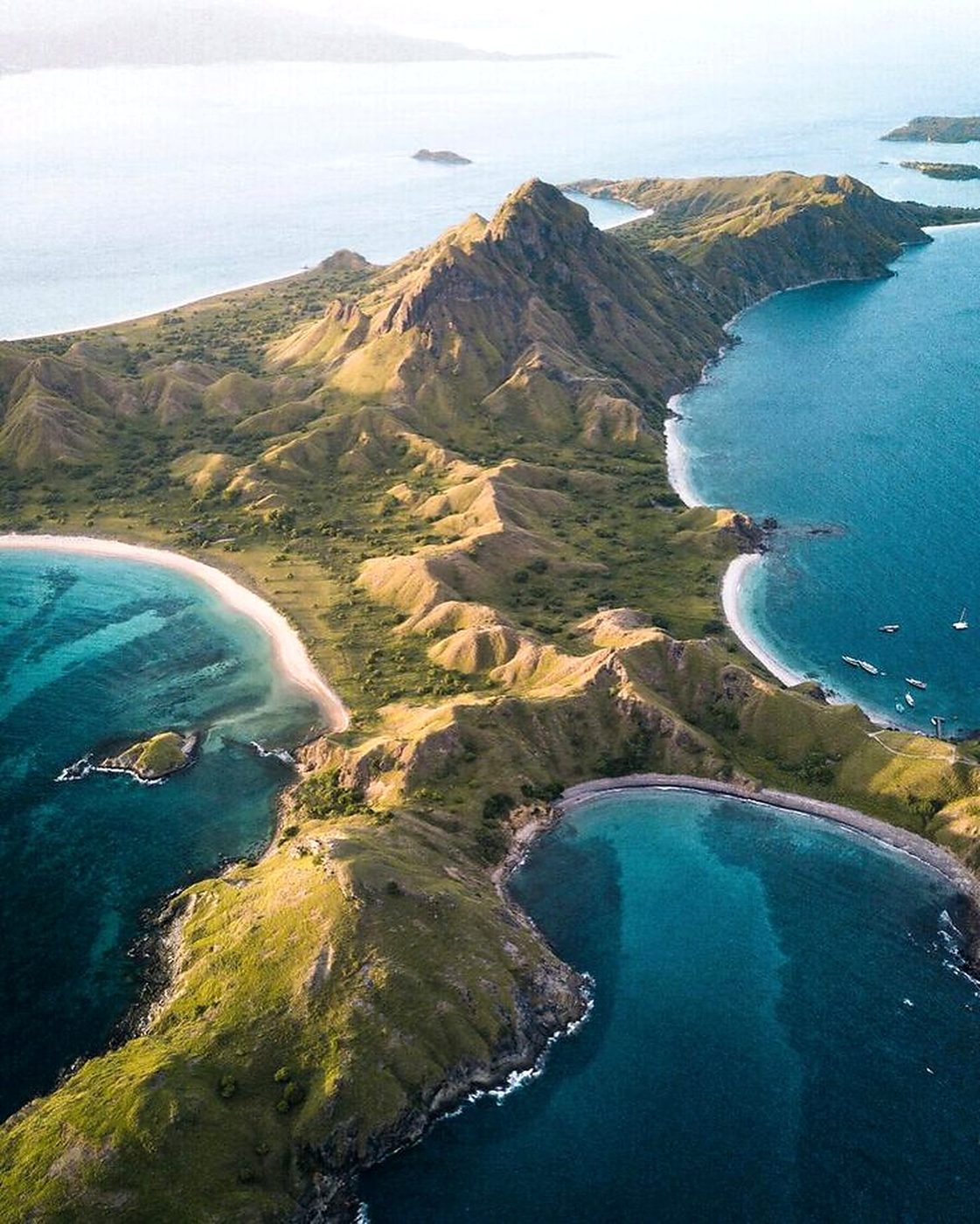
Yes. The ridge above Padar's three curved bays is the view on most Komodo postcards and it lives up to it. The climb is a short but steep stepped path with no shade, so go at sunrise or late afternoon and bring water.
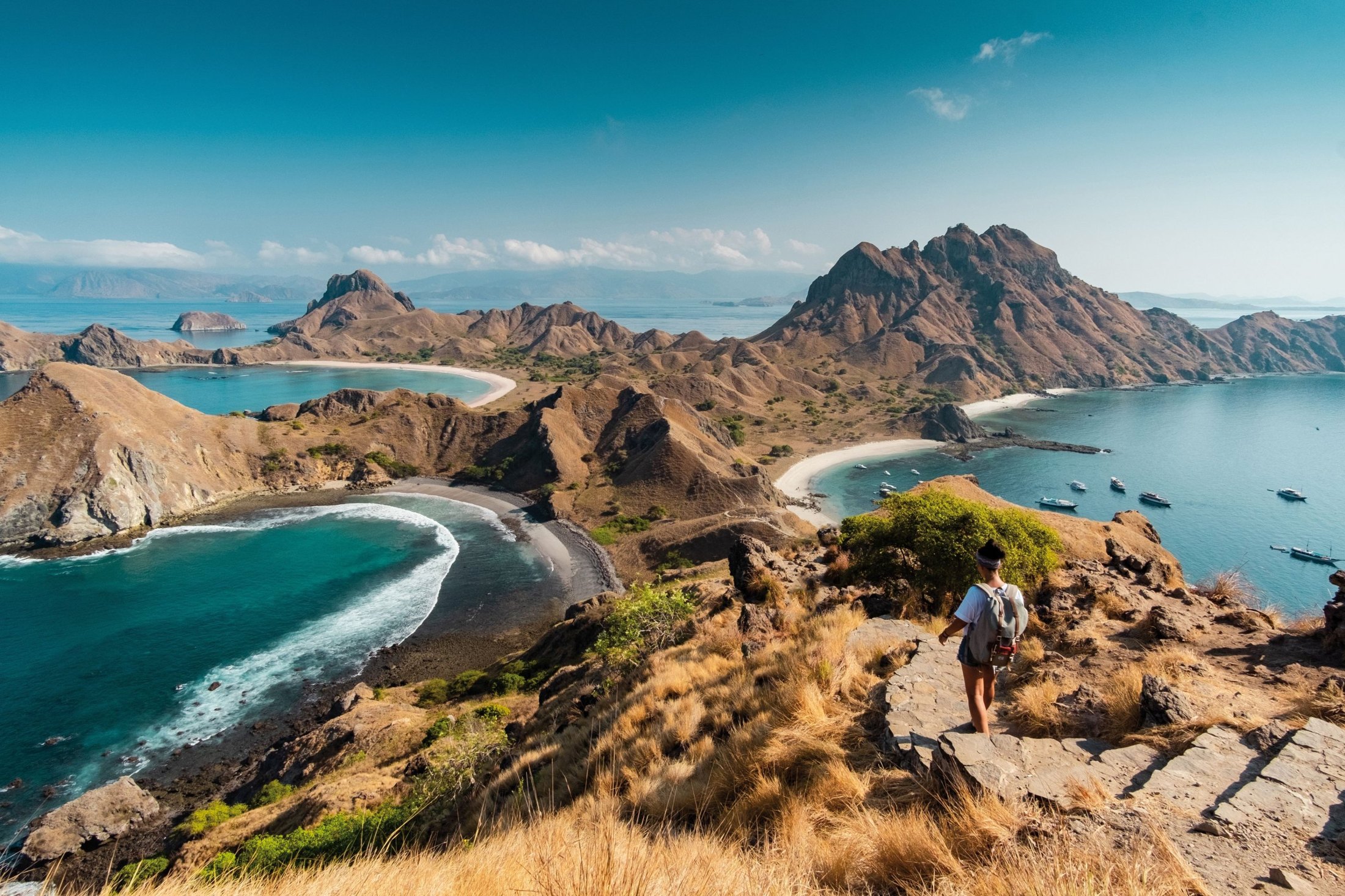
Because nearly every boat aims for Padar at sunrise, the path can be busy, and the Forestry Ministry described the summit as overcrowded in 2025. Fences and signs now mark the safe route. Stay behind them: the hillside drops away on loose ground.
Pink Beach, Manta Point and Taka Makassar
These three stops are the water half of a classic Komodo trip, and they are why a good snorkel mask is worth bringing from home.
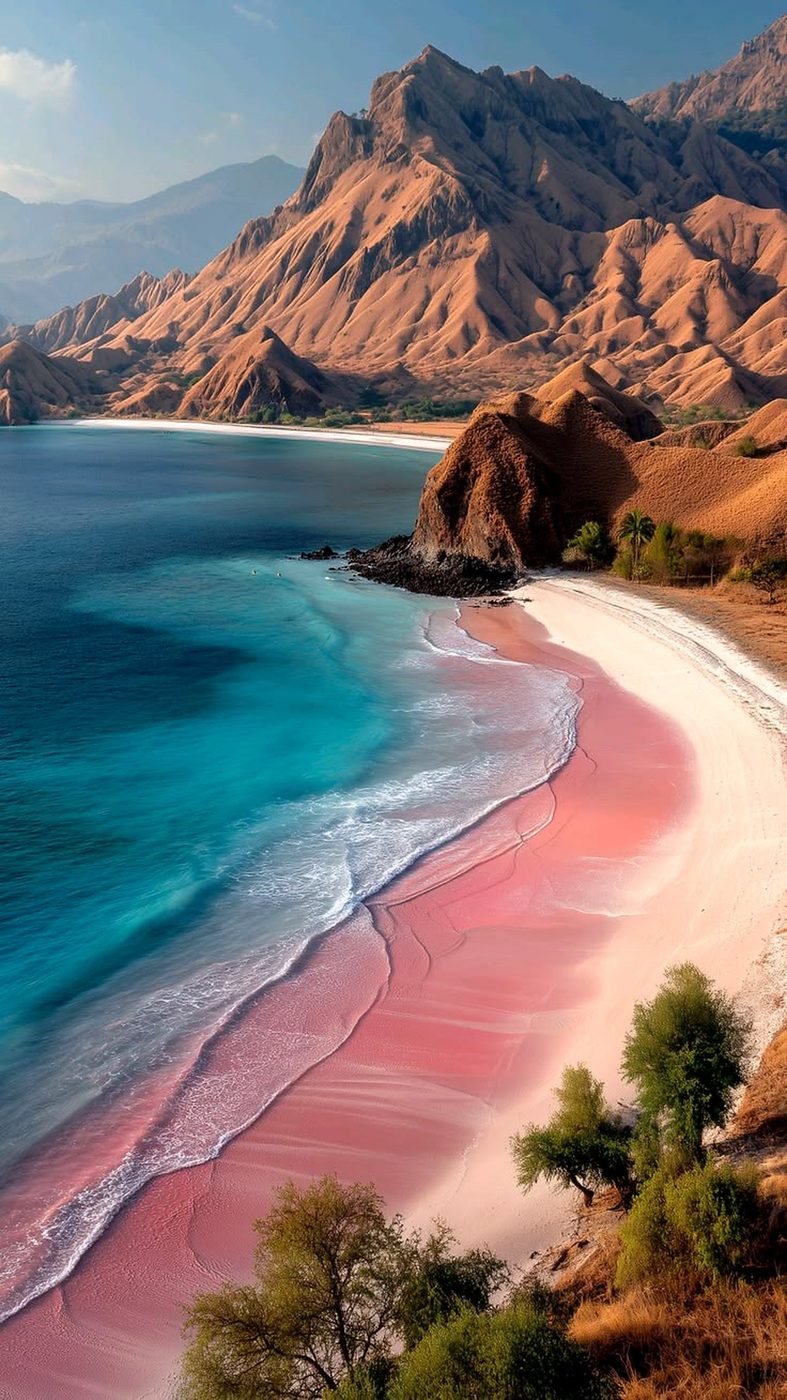
- Pink Beach. The sand is white mixed with fine red fragments from the reef, which gives it a pink tint, strongest in bright light near the waterline. The gentle reef off the beach is one of the best easy snorkel spots in the park, and no certification is needed.
- Manta Point. A shallow area in the centre of the park where manta rays come to feed and be cleaned. Snorkellers drift over them from the boat; the current can be strong, so stay with the guide and do not chase or touch the animals.
- Taka Makassar. A sandbar near Manta Point that appears at lower tides, surrounded by turquoise shallows. It is a common swim and photo stop on day trips and gets crowded at midday.
Divers have much more to choose from, including the current-swept pinnacles in the north and Batu Bolong in the centre. Our guide to diving Komodo National Park covers the main dive sites, the currents and how to dive them safely.
When is the best time to visit Komodo?
The dry season, roughly April to November, is the best time, with calmer seas and clear skies. April, May, September and October are the sweet spot for a budget trip: good weather, fewer people and an easier time getting quota. Late December to February is the riskiest period, when strong winds and high waves can stop boats from sailing for days at a time.
Komodo is one of the driest parts of Indonesia, with around 800 to 1,000 millimetres of rain a year, and the hills turn golden brown by the middle of the dry season. July and August bring the most visitors and the highest boat prices. Between late December 2025 and early February 2026 the Labuan Bajo harbour authority suspended tourist sailings several times because of the weather, and travellers lost booked days. If you come in the wet season, keep spare days and check refund terms before paying.
How do you get to Labuan Bajo?
Most people fly. Komodo Airport (LBJ) is about 3 kilometres from Labuan Bajo town, with direct flights from Bali (Denpasar), Jakarta and Surabaya, plus some international routes such as Kuala Lumpur and Singapore. Bali is the easiest and usually cheapest connection.
Overland across Flores
The slower, cheaper and more rewarding option is to travel across Flores. Roads link Labuan Bajo with Ruteng, Bajawa, Ende and Maumere, and the island has its own airports at Bajawa, Ende and Maumere with flights to Labuan Bajo. A common route is to fly into Maumere or Ende and work west by road over several days, with stops at Kelimutu's crater lakes near Ende, the traditional villages around Bajawa and the rice terraces near Ruteng. The road is long and winding, so plan short legs rather than one marathon day.
Coming from the west, public ferries cross from Sape on Sumbawa to Labuan Bajo. Schedules and journey times depend on weather and season, so check the current timetable with the ferry operator before you commit to an overland route from Lombok.
How do you know if a Komodo boat is safe?
Choose an established operator with a fixed office in Labuan Bajo, ask to see that the boat has its sailing approval from the harbour authority, and check for enough life jackets in your size before departure. Avoid any trip that sails between islands at night, which has been banned in risky parts of the park since January 2026. Cheapest is rarely safest.
The rules tightened after a hard season. On the night of 26 December 2025 a tourist boat sailing from Komodo to Padar lost engine power and sank in the Padar Strait in waves the port authority put at over two metres. Seven of the 11 people on board were rescued; a Spanish father and three of his children died or were never found. A second phinisi sank in the same weeks. Indonesia's parliament criticised oversight that relied on paperwork rather than real inspections, the harbour authority banned night sailing in high-risk areas such as the Padar Strait, and the Tourism Ministry has made marine safety a focus for 2026.
A quick safety checklist
- Life jackets for everyone, including children's sizes, stored where you can reach them. Ask to see them before you board.
- A passenger manifest with your name on it, and a briefing on emergency procedures.
- Working radio and a crew who check the forecast. Ask what happens if the weather turns, and where the boat shelters at night.
- A realistic itinerary. If a speedboat promises every highlight and a sunset at Padar plus a fast run home in the dark, walk away.
- Accept cancellations. If the harbour authority closes the sea, it is for a reason. Book with an operator that states its refund policy in writing.
Boat fires are a further risk, on budget and luxury boats alike. Note where the exits are on the first evening, and do not sleep with a phone charging on a mattress.
Where do budget travellers stay and eat in Labuan Bajo?
Stay in Labuan Bajo town itself, within walking distance of the harbour, where boats leave from. Hostels with dorms and simple guesthouses cluster on the streets above the waterfront, often with sea views from the rooftop. Resorts along the coast outside town are pleasant but add transfer costs and time to every early start.
Eating cheaply is easy. Local warungs serve rice, fish and vegetables for a fraction of what the tourist cafes charge, and in the evening seafood stalls near the waterfront grill fish to order. Agree the price before it goes on the coals. Labuan Bajo has grown fast since it was named a national priority destination in 2018, and waste and water supply are real problems, so carry a refillable bottle and refill from the large water containers that most hostels and boats provide.
Mistakes to avoid
- Turning up without a booking in peak season. Under the quota, a boat with no tickets cannot take you, however good the deal.
- Comparing headline prices. One operator's cheap trip may exclude park fees that another includes.
- Flying out the same day as the boat returns. Weather delays are common; leave a buffer day.
- Touching coral or standing on the reef. Wear reef-safe sun protection and a rash vest rather than slathering on cream.
- Treating the dragons as props. No selfies close to an animal, no wandering off from the ranger.
Plan your trip
For a budget visit, allow at least three nights in Labuan Bajo: one to arrive, a 2D1N boat trip, and a spare day for weather. Book the boat a few weeks ahead for shoulder months and earlier for July and August, and check what the price includes. If you have more time, add a week crossing Flores by road. Our Discover Indonesia: Komodo National Park and Flores & Komodo guides cover routes, itineraries, where to stay and practical planning in more depth, and our backpacking guide helps you string Komodo into a longer overland trip. Browse all our guides.
Facts checked October 2026. Park fees, the daily quota, sailing permits and night-sailing rules change often; confirm with the Komodo National Park Office (BTNK), the SiOra booking system and the Labuan Bajo harbour authority (KSOP) before you travel.
- Kunjungan di Taman Nasional Komodo dibatasi jadi 1.000 orang per hari (Antara, April 2026)
- Kemenpar nilai pembatasan kunjungan ke TN Komodo sesuai UU RI (Antara, May 2026)
- BTN Komodo sosialisasi penyesuaian tarif baru masuk kawasan (Antara, October 2024)
- Indonesia to limit Komodo Park visitors to protect Padar Island (Antara, August 2025)
- Search underway for four Spanish tourists after Labuan Bajo boat sinks (Antara, December 2025)
- Spanish soccer coach missing after tourist boat sinks in Komodo National Park (ABC News)
- Indonesia ends 15-day SAR for missing Spaniard in Labuan Bajo boat tragedy (Bernama)
- Insiden kapal Labuan Bajo, DPR soroti lemahnya pengawasan dan mitigasi cuaca (Infobank)
- KSOP Labuan Bajo larang pelayaran kapal wisata di malam hari (Metro TV, January 2026)
- Pelaku wisata protes kebijakan penutupan pelayaran di Labuan Bajo (CNN Indonesia, February 2026)
- Kemenpar siapkan strategi tingkatkan keselamatan wisata bahari (Bisnis.com, April 2026)
- Pricey Komodo Island ticket; Labuan Bajo tourism actors go on strike (Tempo, 2022)
- Tiket Pulau Komodo batal naik (Bisnis.com, December 2022)
- Indonesia pushes ahead with Rinca Island project despite UNESCO objection (TTG Asia, 2021)
- Komodo National Park (Wikipedia)
- Komodo Airport (Wikipedia)
- Komodo National Park fees 2026 (Casa de Capulet, operator)
- Komodo National Park entrance fees and regulations 2026 (Komodo Resort, operator)