One is the largest coral reef system on Earth. The other holds more coral species than anywhere else. The Great Barrier Reef and the Coral Triangle are often mentioned in the same breath, but they are very different places to dive. Here is how they compare.
Two different things
The Great Barrier Reef is a single reef system off the coast of Queensland, Australia: about 2,300 kilometres long, made up of some 3,000 individual reefs and protected as one marine park of 344,400 square kilometres. It is the largest coral reef system in the world and a World Heritage Site since 1981.
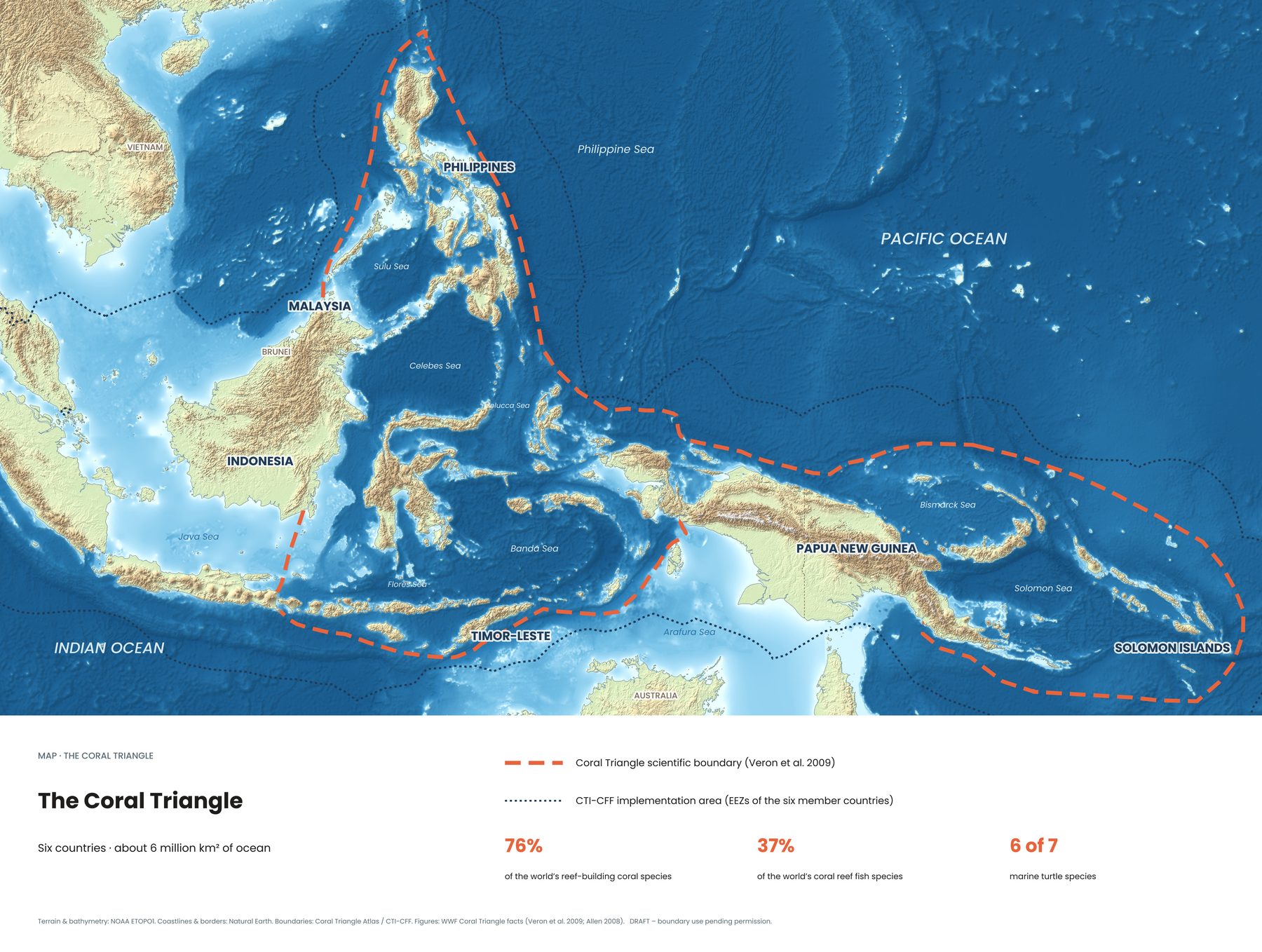
The Coral Triangle is not one reef but a region: about six million square kilometres of sea across six countries, from Indonesia and the Philippines to Papua New Guinea and the Solomon Islands. Its border was drawn around the waters with the highest coral diversity on the planet. Indonesia holds the largest share.
Side by side
| Coral Triangle | Great Barrier Reef | |
| Area | About 6 million km² of sea | 344,400 km² marine park |
| Countries | 6 | 1 (Australia) |
| Coral species | 605 reef-building species, 76% of the world's total | About 450 hard corals, plus many soft corals |
| Reef fish species | About 2,228 | About 1,625 |
| Marine turtles | 6 of the world's 7 species | 6 of the world's 7 species |
| People living along it | Around 120 million depend on it | A thinly populated coast |
| Protection | Hundreds of separate marine parks and reserves | One marine park under one authority |
The numbers tell the main story. The Great Barrier Reef is bigger as a single system. The Coral Triangle is richer: more coral species, more reef fish and a far greater variety of habitats, from mangroves and seagrass to deep walls and volcanic black sand.
Why the Coral Triangle is so rich
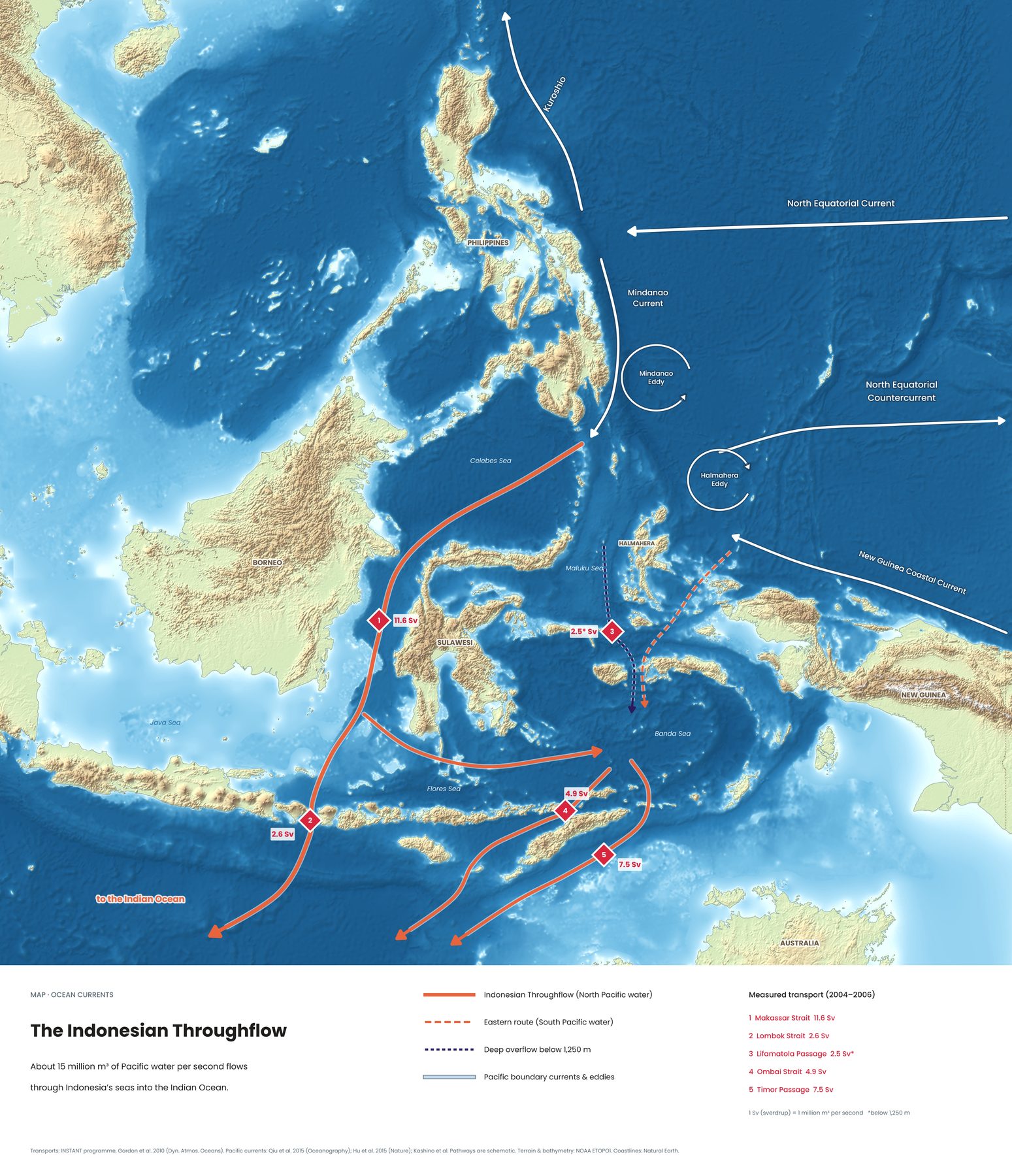
Thousands of islands each create different conditions within a short distance. Warm water stays warm all year. And the Indonesian Throughflow, the ocean current that carries Pacific water through Indonesia's straits to the Indian Ocean, moves nutrients and coral larvae from reef to reef. Scientists see the region as a cradle of marine life: many species found across the Indo-Pacific are thought to have spread outward from here.
Read more about the Indonesian Throughflow →
Under pressure, in different ways
Both are threatened by warming seas. The Great Barrier Reef has seen mass bleaching in 1998, 2002, 2016, 2017, 2020, 2022 and 2024, according to the Australian Institute of Marine Science. In the Coral Triangle the 2024 heatwave also hit hard, especially on the Pacific side, while parts of central and eastern Indonesia stayed below the bleaching alert level that year.
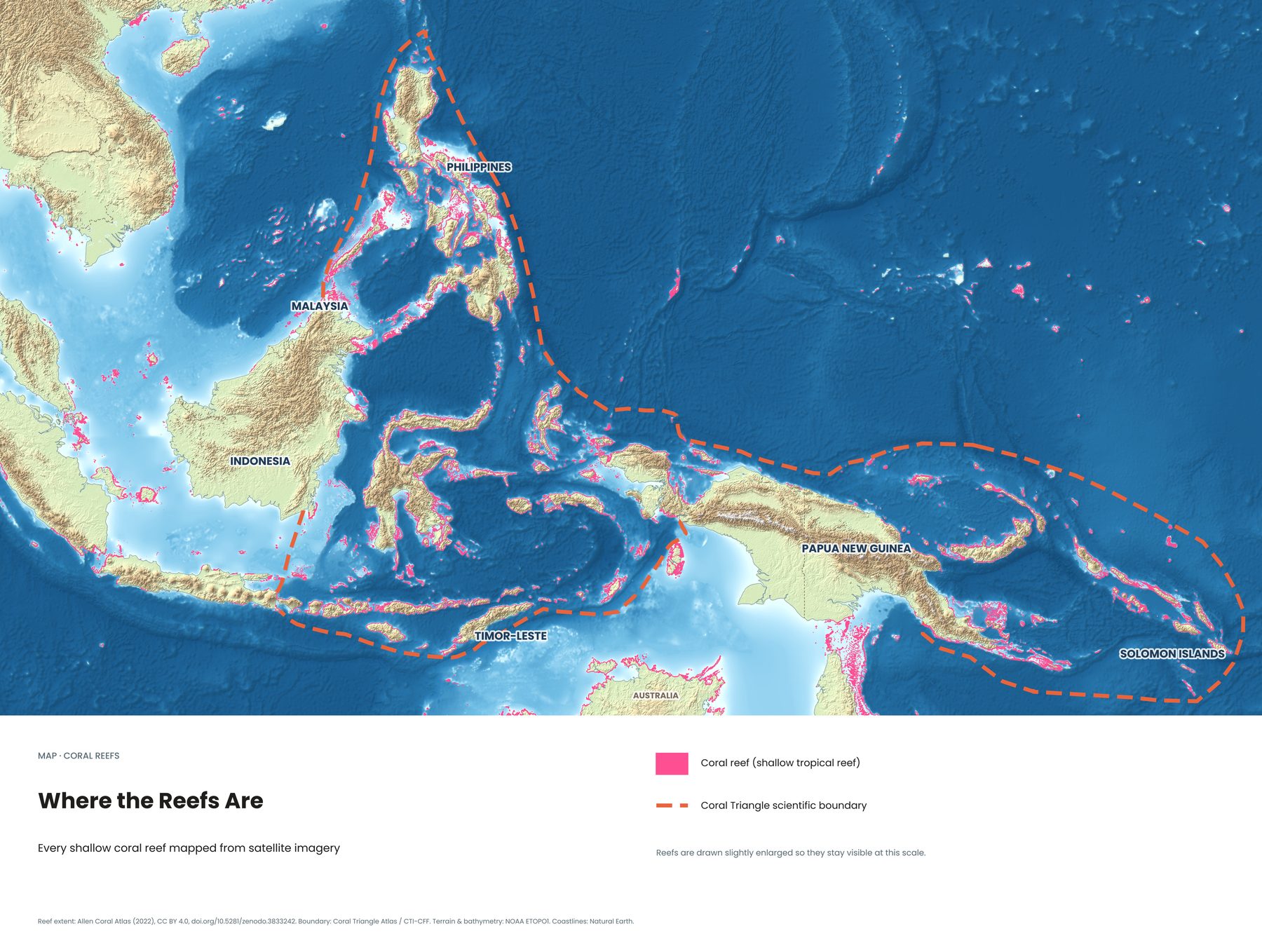
The Coral Triangle carries extra pressure from people: overfishing, destructive fishing, coastal development, sediment from rivers, and oil from some of the busiest shipping lanes in the world. Protection is a patchwork. Some parks, like Raja Ampat and Wakatobi, are well run. Others exist mostly on paper.
The 2024 heatwave in the Coral Triangle, on one map →
Which is better for diving?
It depends on what you're after.
- Choose the Great Barrier Reef for easy logistics, excellent infrastructure, strict regulation and very good snorkelling from day boats out of Cairns, Port Douglas and the Whitsundays. Liveaboards reach the outer Ribbon Reefs and the Coral Sea. In the warmer months, roughly November to May, stinger suits are recommended because of box jellyfish and Irukandji.
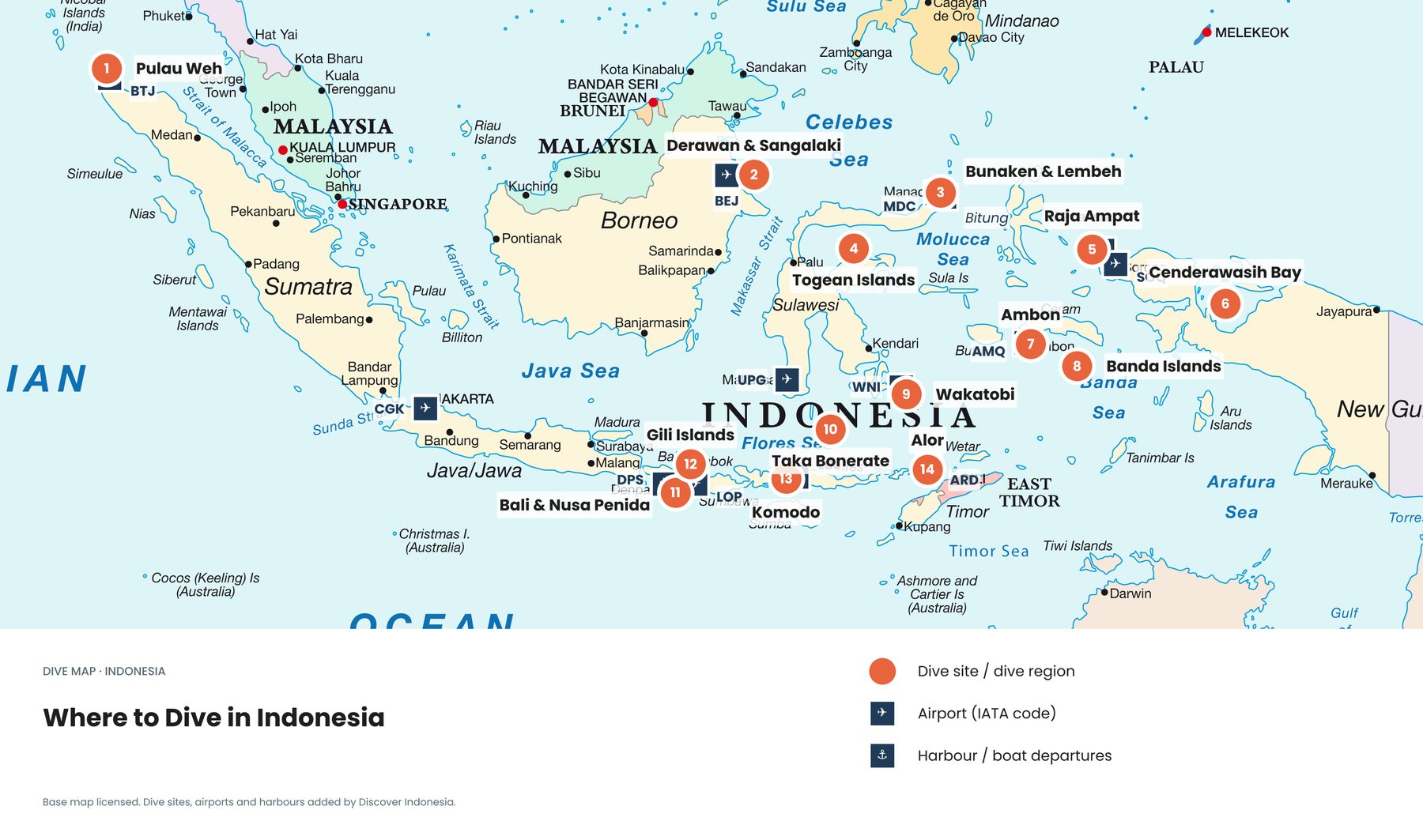
- Choose the Coral Triangle for variety and sheer abundance: the fish counts of Raja Ampat, the currents and mantas of Komodo, the strange small creatures of Lembeh, the quiet reefs of Wakatobi. Diving is generally cheaper, the reefs are often less crowded, and you can combine it with volcanoes, temples and island life on land. Some destinations are remote and take more planning.
Many divers do both in a lifetime. If you want to see the most life on a single dive, the Coral Triangle is hard to beat. Here are the ten best places to see it →
Frequently asked questions
Is the Great Barrier Reef part of the Coral Triangle?
No. The Great Barrier Reef lies off northeastern Australia, outside the Coral Triangle's boundary, which runs through Indonesia, the Philippines, Malaysia, Timor-Leste, Papua New Guinea and the Solomon Islands.
Which has more coral?
The Great Barrier Reef is the largest single reef system. The Coral Triangle has more coral species: 605 reef-building species, about three-quarters of all known species.
Which is better for snorkelling?
Both are excellent. The Great Barrier Reef has easy, well-organised snorkelling trips. In the Coral Triangle, places like Raja Ampat, Wakatobi and Nusa Penida have reefs rich enough to see a huge variety of life without diving.
Sources
- Great Barrier Reef Marine Park Authority (reef facts)
- Australian Institute of Marine Science (mass bleaching events)
- WWF (Coral Triangle facts)
- Boundary: Coral Triangle Atlas / CTI-CFF. Reef data: Allen Coral Atlas, CC BY 4.0. Terrain: NOAA ETOPO1